
ACCELERATING E-MOBILITY WITH PRECISION AND SPEED
How CRP Firms Engineered the Heart of the Energica Ego
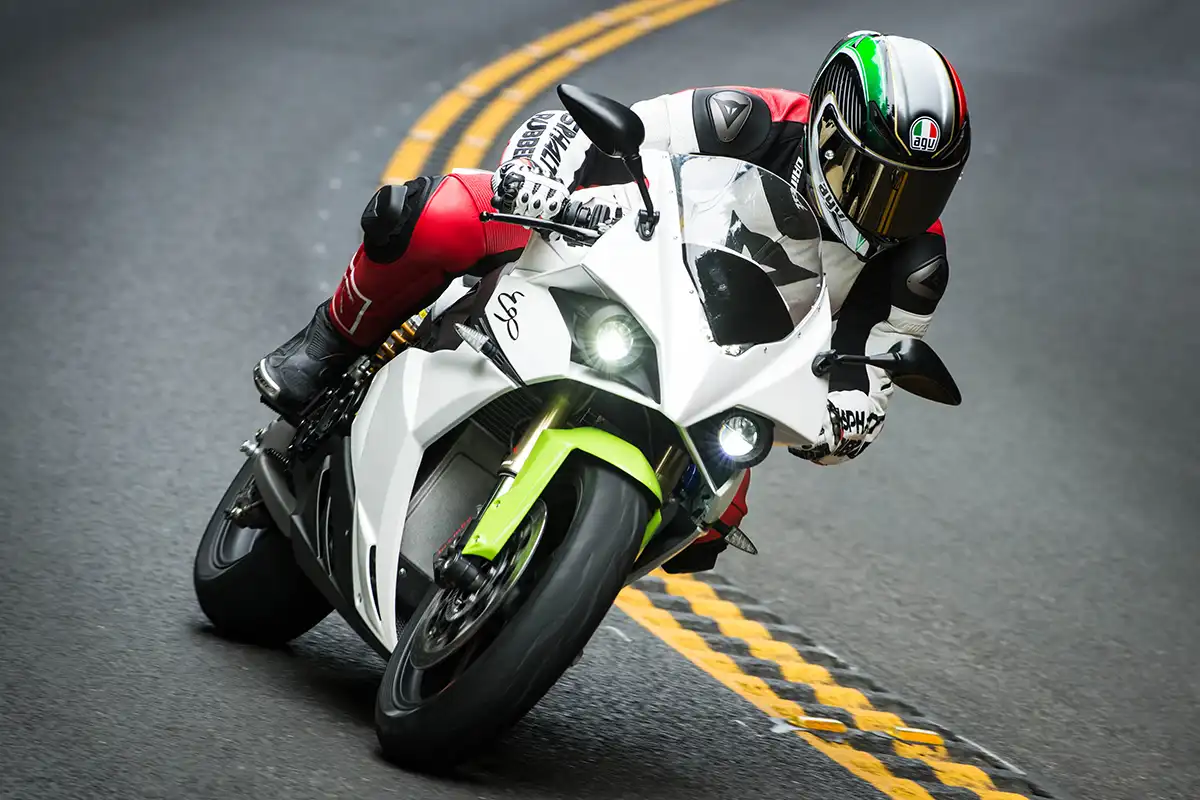
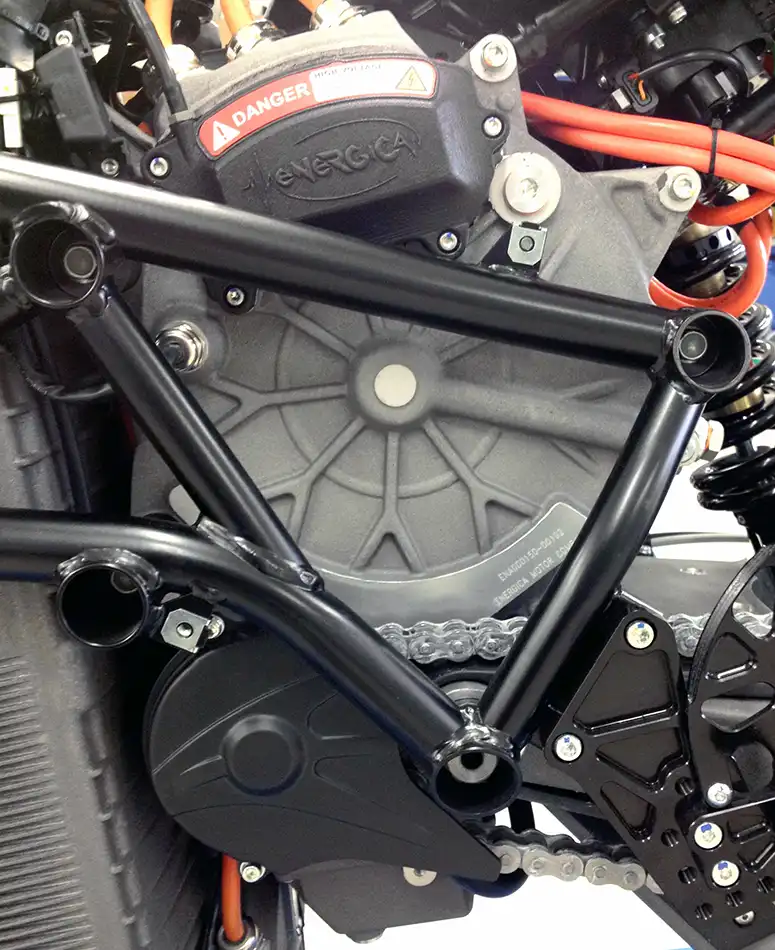
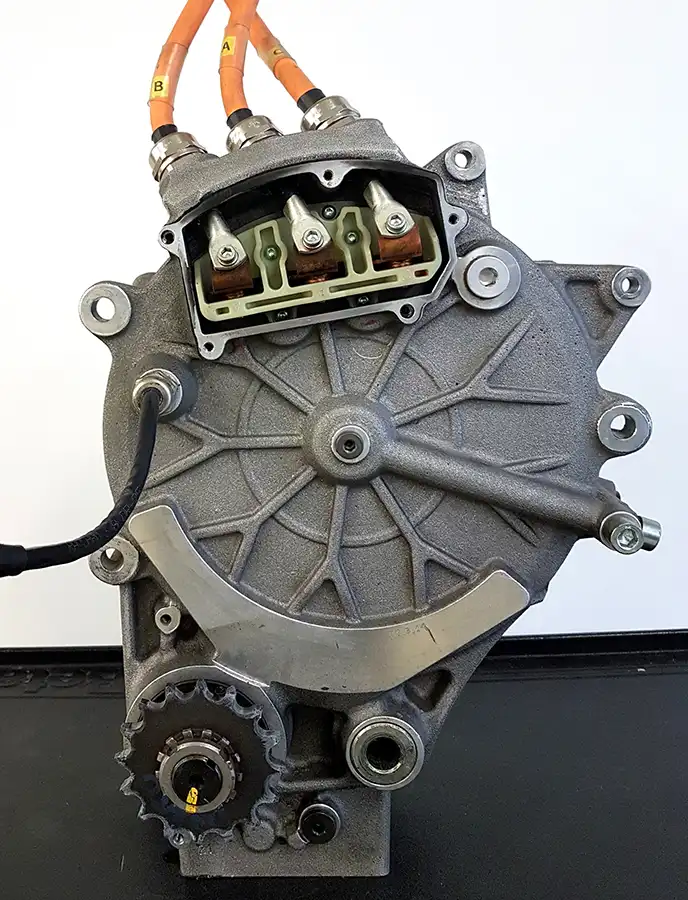
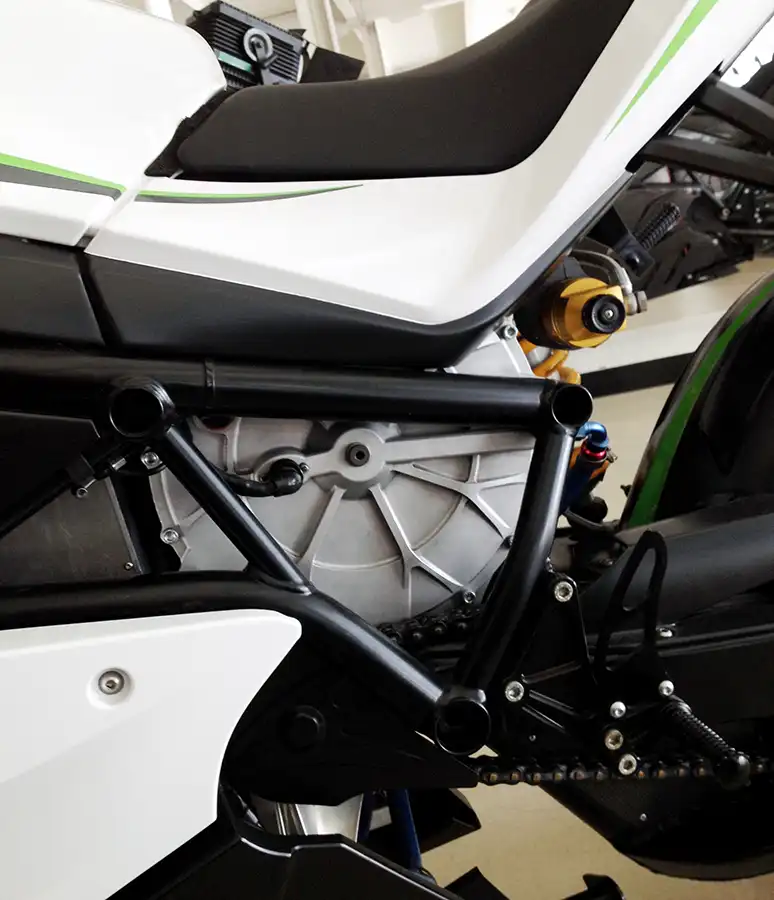
In the heart of Italy’s Motor Valley, CRP firm and Energica Motor Company created something unprecedented: the first Italian high-performance electric motorcycle, Energica Ego. Behind its core lies a key innovation – the motor housing, designed, prototyped, and manufactured through the integrated expertise of CRP Technology and CRP Meccanica.
From additive manufacturing with Windform composites to CNC machining in aerospace-grade aluminum, CRP firms applied its complete technological chain to accelerate development without compromising performance.
Integrated Engineering Value
Engineering activities developed and coordinated within CRP’s multidisciplinary teams, aligning power-unit development with thermal efficiency and dynamic response targets.
EMCE evolution achieving -10 kg motor weight reduction
Rotor inertia reduction improving braking response
Transition from oil to liquid cooling architecture
Structural optimization maintaining mechanical reliability under dynamic loads
THE TECHNICAL HEART OF THE PROJECT
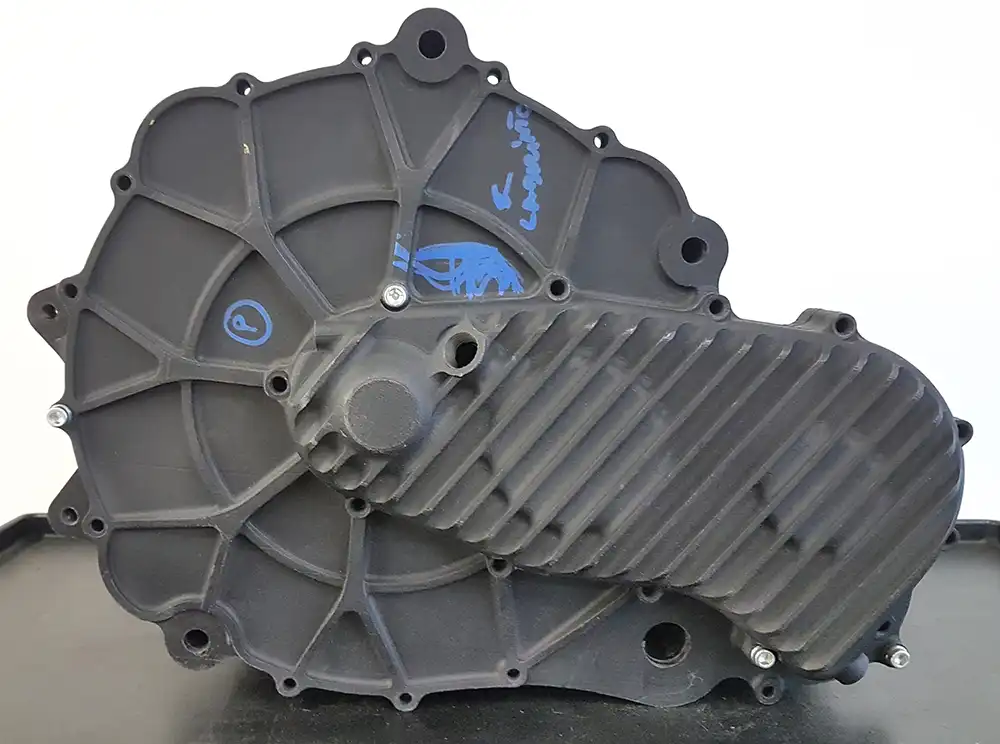
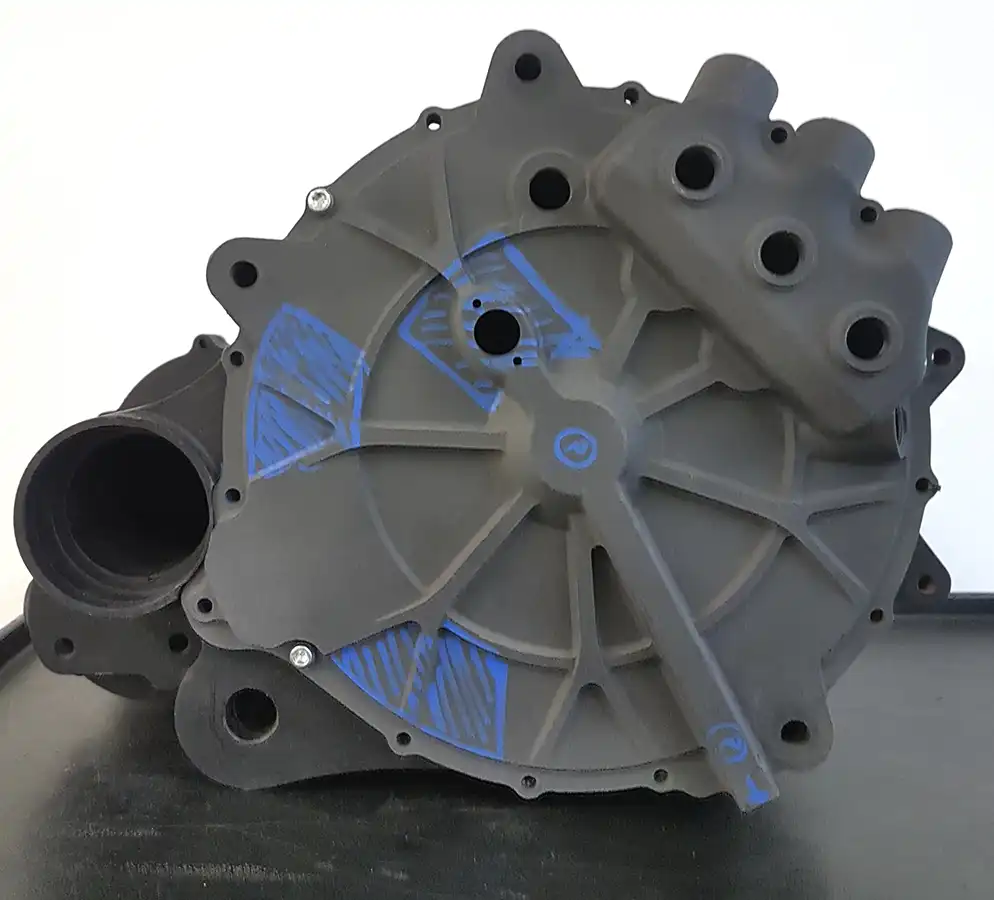
Phase 1. Functional Prototype in Windform
The project began with a functional prototype produced via SLS 3D printing in Windform LX 2.0 – a glass fiber-reinforced composite polyamide, now replaced with the Windform LX 3.0. This 3D-printed version allowed Energica’s engineers and mechanics to:
- Validate the 3D CAD model
- Test tolerances, gear alignment, and cable routing
- Analyze fit and assembly operations directly on the vehicle
The prototype in Windform wasn’t just visual – it was fully functional. It could be mounted, handled, and tested under real-world conditions on road and track. This cut development time and cost, while also ensuring serviceability in real use by dealers and mechanics.
Phase 2. CNC Machining from Aluminum Billet
Once validated, the design was translated into a CNC machined prototype. The housing was produced using CRP Meccanica’s 5-axis machining centers in two aerospace-grade alloys:
- 6082 aluminum for the main body
- 7075 aluminum for covers and critical interfaces
The structure was composed of two halves: one with a through-window for mounting the motor, and one for the gear reducer and oil pan. The lower shell housed pinion supports and oil flow systems. Tight tolerances were required for dual bearing rows and precise gear alignment.
CRP’s experience from Formula 1 was key to machining accuracy, material behavior, and thermal management. The prototype was assembled without issue and validated on Energica’s road-going test model.
Phase 3. Rapid Casting and Pre-Series
With a proven design and verified tolerances, CRP moved to the pre-series phase. The motor housing was manufactured via rapid sand casting using the same aluminum alloys from the prototype phase.
All prior validations – tolerances, fit, machining steps – translated directly into this stage, making the process seamless and industrialization-ready.
Complexity handled through integration
Support for high-torque motors
Integration of gear reducer and final drive chain system
Structural integrity under vibration and thermal stress
Lightweight design despite heavy propulsion unit
CRP Group managed the entire workflow—from initial CAD checks to final casting—reducing time-to-market and delivering production-ready components with zero redesign loops.
The project exemplifies the effectiveness of a vertically integrated engineering chain:
design validation → functional prototyping → CNC billet machining → rapid casting for pre-series.
