
ADVANCED ENGINEERING FOR F1 GEARBOX OPTIMIZATION
CRP Meccanica and Minardi’s Race to Rethink Gearbox Lubrication
In 2003, Minardi and CRP Technology partnered to radically improve gearbox efficiency for the 2005 Formula 1 season. The challenge: redesign the housing for a dry sump gearbox, reducing oil volume and internal drag, increasing rigidity, and optimizing the flow path for effective lubrication.
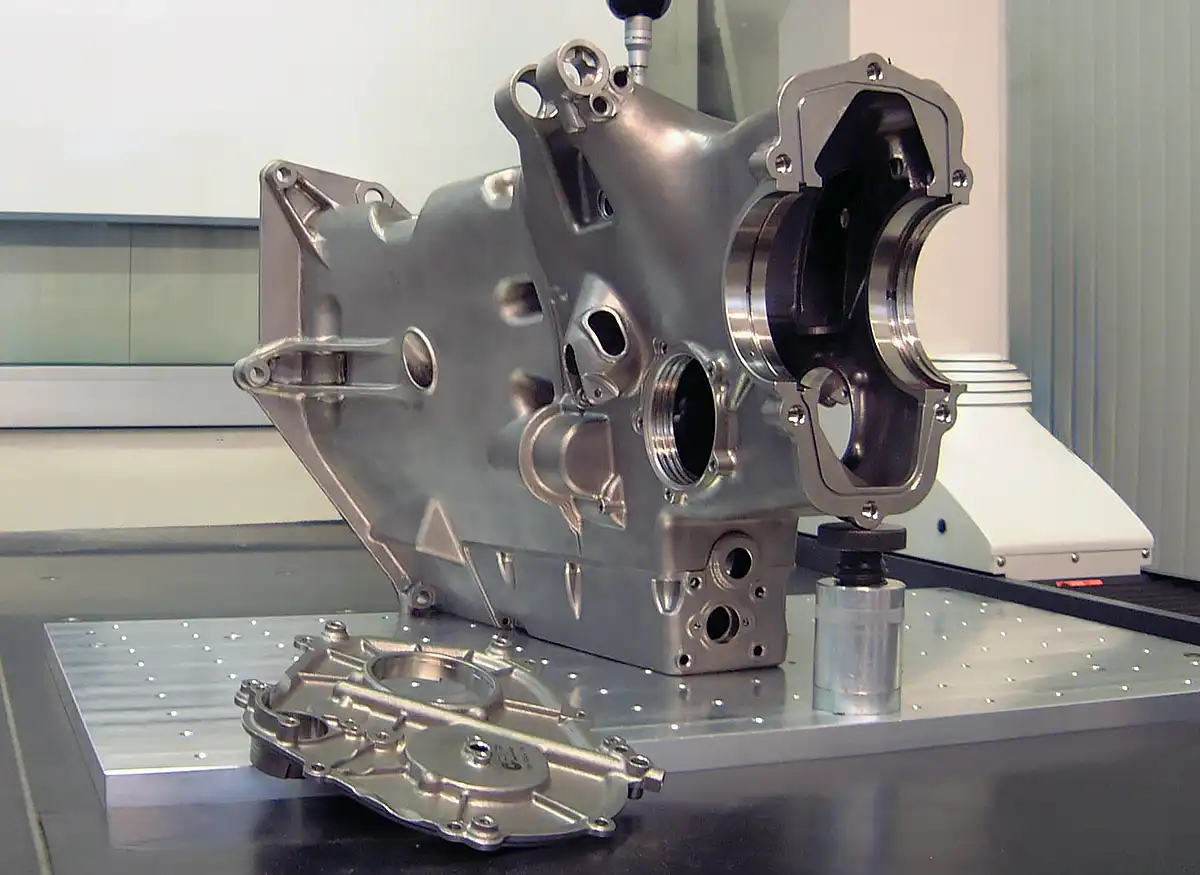
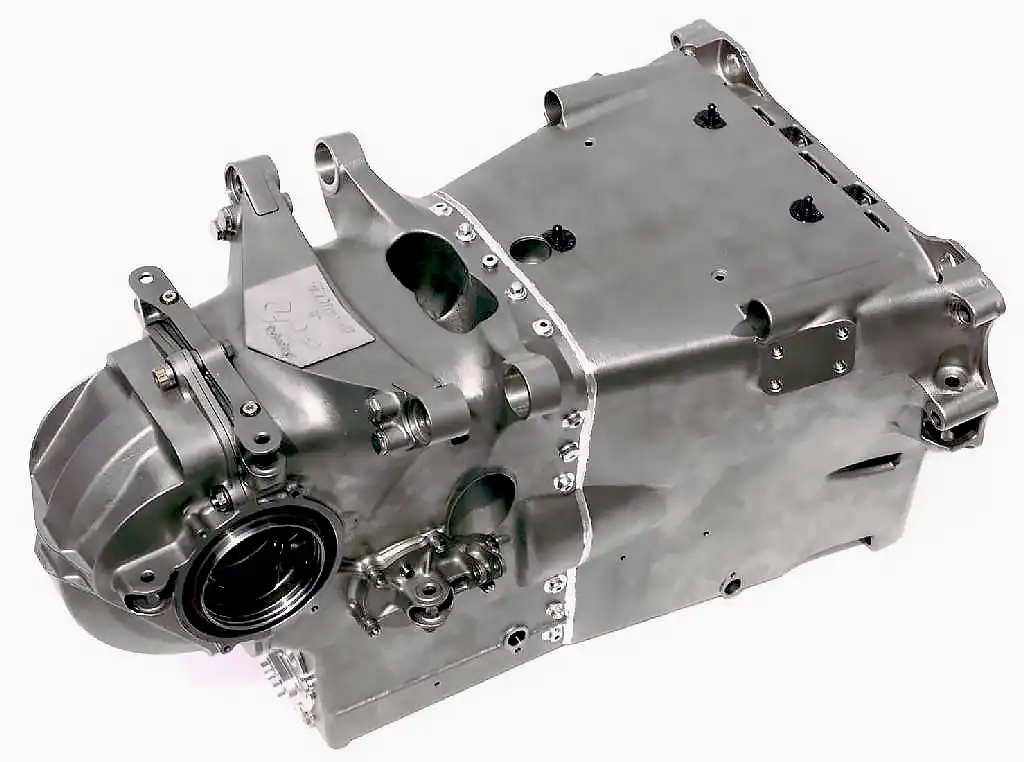
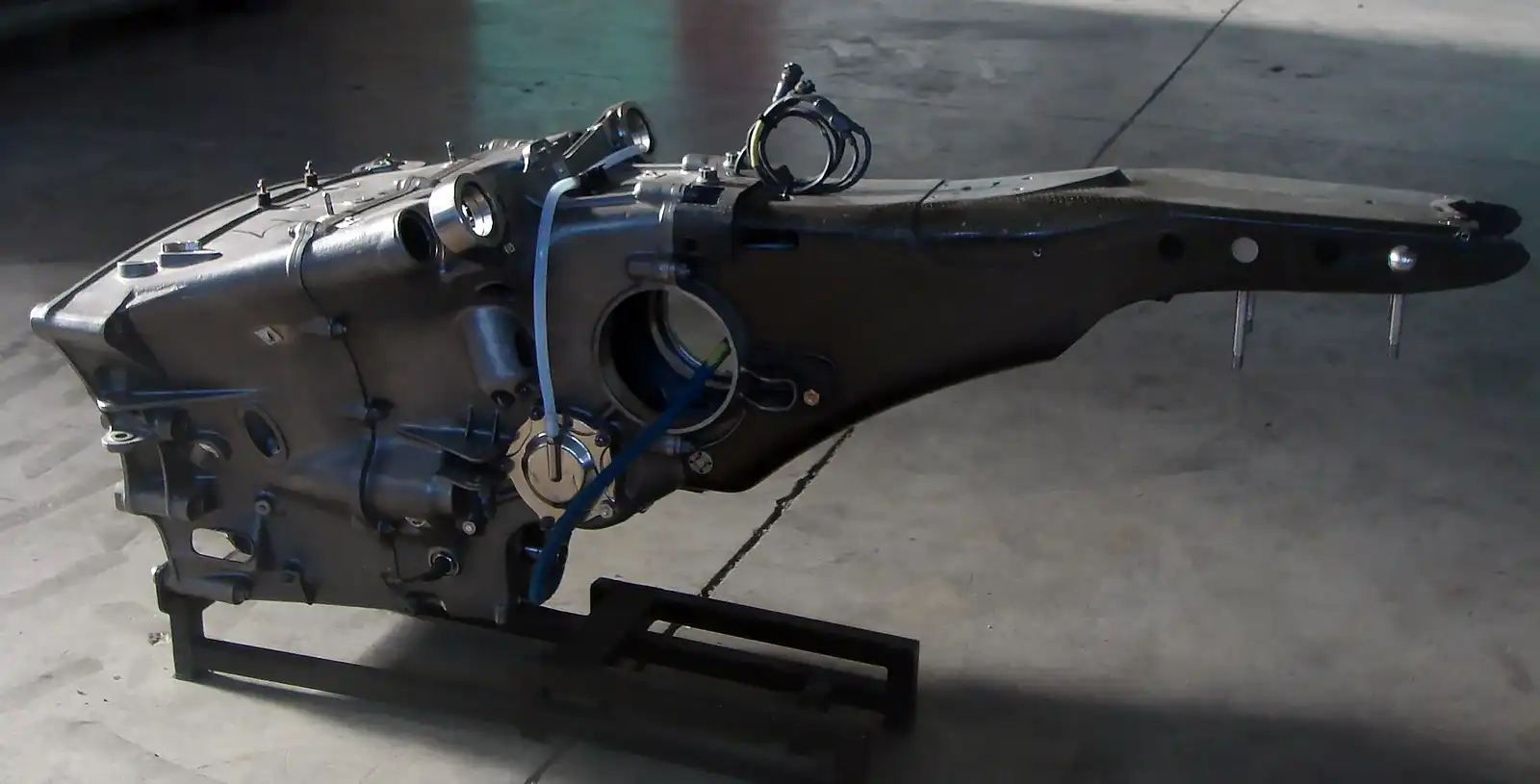
To achieve this, the teams used an integrated process: from visual fluid testing with transparent SLA components to full-speed dyno testing with functional propotypes 3D-printed in Windform GF material – culminating in a titanium gearbox case produced through Rapid Casting using laser-sintered patterns.
THE TECHNICAL HEART OF THE PROJECT
Phase 1. Visual Testing with SLA Prototype
The team began with a gearbox case produced via stereolithography to assess oil flow visually. Using red hydraulic oil (for better visibility) and a transparent resin, the gearbox was run on a dyno at limited RPM. An external volumetric pump replaced the traditional internal one, enabling dry sump operation.
Key findings:
- Excessive oil flooded the third shaft bearings
- Gravity-fed return flow from the differential was minimal
- Lubrication efficiency could be improved by redesigning internal flow paths
Phase 2. Functional Testing with Windform GF
To move closer to real-world operating speeds, CRP built a second prototype in Windform GF material using 3D printing Selective Laser Sintering (SLS) technology. This allowed testing up to 6,000 RPM, replicating race conditions and validating the revised design.
Key actions:
- Reduced oil flow to third shaft bearings (via hole downsizing to 1 mm)
- Confirmed system pressure improvements
- Evaluated gearbox behavior with oil volumes from 1 to 2.5 liters
- Identified oil turbulence and unnecessary wet zones due to internal shape
Insights: Reducing internal volumes and flow paths cut weight, thermal stress, and power loss, while ensuring lubrication remained effective even at lower oil quantities.
Phase 3. Titanium Gearbox via Rapid Casting
The final gearbox was produced using Rapid Casting with laser-sintered CastForm® patterns and Ti-6Al4V titanium alloy. This technique allowed shape freedom during design and mechanical integrity during use.
Benefits of the process:
- Integrated suspension mountings (no extra hardware needed)
- Lower overall volume and weight reduction of ~20–25%
- Twice the torsional stiffness vs magnesium gearboxes
- Improved gear wear and reduced friction losses
- High surface finish and tight tolerances equivalent to fully machined parts
This marked a significant leap in gearbox architecture, combining weight savings, fluid efficiency, and structural integration—all achieved through CRP’s mastery in Rapid Prototyping and Casting.
What this Project proves
Less oil
Less weight, less friction, less heat
Optimized flow design
More efficient lubrication, even at reduced volume
SLS and casting integration
Faster testing, accurate final form
Titanium alloy + Rapid Casting
Structural strength with design freedom
By leading every stage – from functional testing to production casting – CRP helped Minardi achieve a new generation of gearbox: lighter, stronger, smarter.