In Modena, homeland of supercars and Italy’s Motor Valley, Energica Motor Company S.p.A. developed Ego, the first high-performance full electric motorcycle. The bike was rigorously engineered using F1-derived technologies and Windform®, our proprietary range of high-performance SLS composite materials.
The Energica project stems from the entrepreneurial vision of the Cevolini family, owners of the CRP firms, building on the CRP Racing and eCRP experience back in 2009. The CRP companies played a fundamental role in Energica’s industrial development from the very first prototypes, combining decades of expertise in High Precision CNC machining (CRP Meccanica) with professional 3D printing and Windform® composite materials (CRP Technology). Throughout every project phase – from early design to construction – the CRP firms have backed the Energica team with consistent technical support and an innovative approach to new materials and technologies.
The adoption of Powder Bed Fusion with fiber-reinforced composite polymers enabled Energica to reach the market quickly, accelerating prototyping and product development.
Integrated Engineering Value
Engineering activities developed and coordinated within CRP’s multidisciplinary teams, aligning ergonomic components with vehicle dynamics targets.
The object of this application case is the creation of the Energica motorcycle’s seat.
To support R&D and testing, CRP Technology took charge of the rider and passenger seat construction. The decision to rely on functional 3D printed prototypes – enabling a thorough study aimed at minimising error margins on the injection mould – emerged from a joint process between CRP Technology and Energica’s engineering team. Professional 3D printing and Windform® materials allowed Energica to compress design and development timelines significantly.
The Energica seats consist of a soft seat and a seat plate. The plate is a load-bearing component: it supports the soft part that carries the rider’s weight, and must guarantee enough flexibility to absorb stress from rough roads and sporting use. The seat also opens to allow access to the charging socket, making the opening/closing mechanism a critical feature.
Creation of the 3D printing prototypes
Two functional prototypes were produced. Development and validation followed dedicated test plans (ergonomics, assembly/fitting) aimed at verifying full correspondence to functional requirements and compliance with quality and reliability targets. Notably, the 3D printed seats were used throughout Energica’s motorbike validation campaigns, Bosch’s ABS validation tests included.
First prototype
The seat had to be comfortable and aesthetically pleasing, while resisting impact, atmospheric agents and wear, and incorporating reliability features.
To meet these requirements, the first prototype was built using two materials from the Windform® range:
- Windform® RL for the soft part – a durable rubber-like thermoplastic elastomer chosen to simulate the foam. Its mechanical profile makes it particularly suited to additive applications requiring complex geometries and flexibility as a key requisite.
- Windform® GT for the seat plate – a glass fiber reinforced composite polyamide that performs well where resistance and elasticity are both required, and that proves highly valuable in components exposed to vibration and shock.
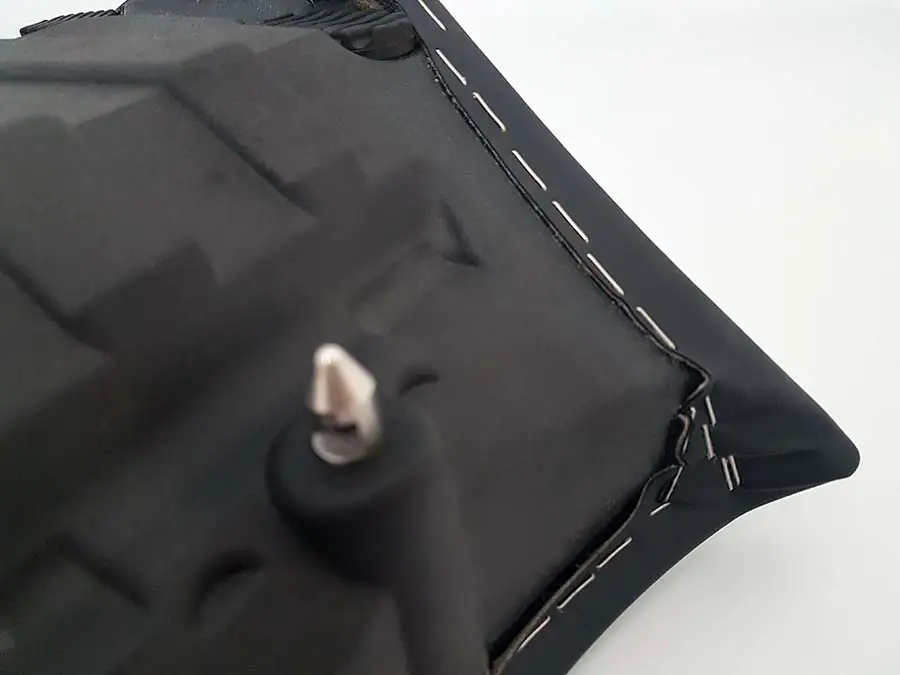
The two parts were then bonded and the assembly was upholstered with stapled fixing. No particular difficulties emerged: parts 3D printed in Windform® can be covered with any material – upholstery, microfiber, leather – and stapled, with all Windform® formulations allowing the coating to adhere securely and last over time.
The prototype was returned to Energica, mounted directly on the bike and tested on the road.
Second prototype
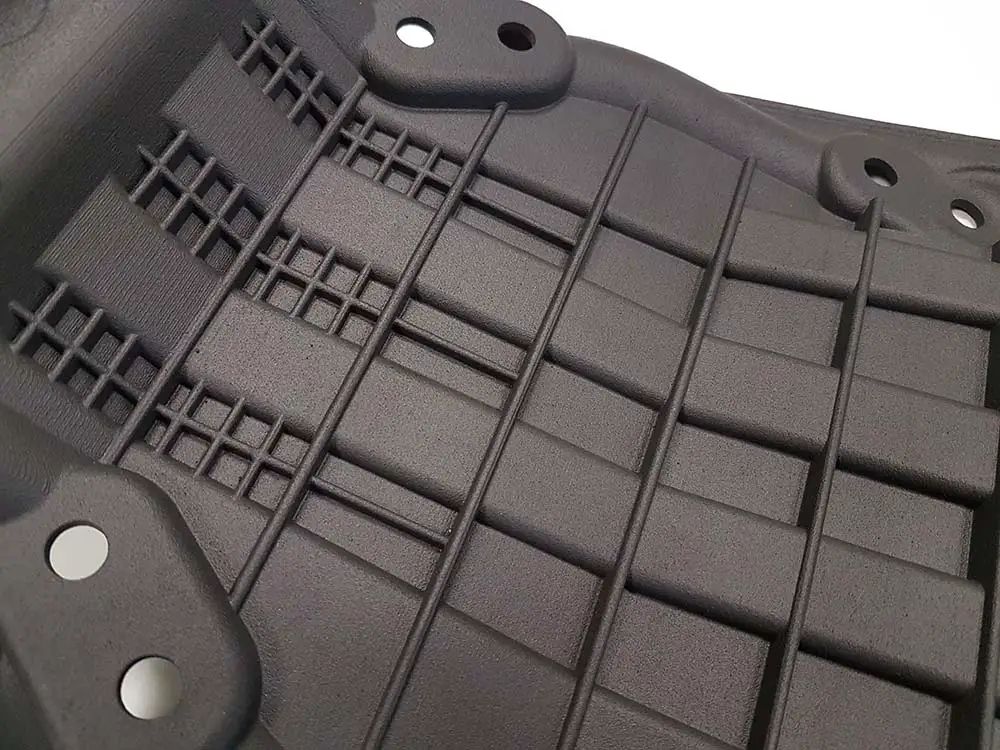
Road tests revealed a slight bending of the seat that exceeded the initial design intent. With CRP Technology’s technicians, the issue was addressed by adding a ribbed structure to the base of the seat plate to stiffen the component.
The new seat plate was again produced in Windform® GT via Laser Sintering, while the soft seat – previously printed in Windform® RL – was replaced by foam. Bonding and upholstery proceeded without issues.
Testing on the second prototype delivered positive results, and Energica’s engineers confirmed that the bending issue had been overcome. Once the project was approved, mould makers developed the tooling for industrial production.
Creation of the finished product using traditional technology
The professional 3D printing technology and Windform® composite materials enabled the Energica team to shorten product development phases, and to continue testing the component/prototype directly on the motorbike waiting for the end-use plastic part.