
End-Use components for TeUAS platforms
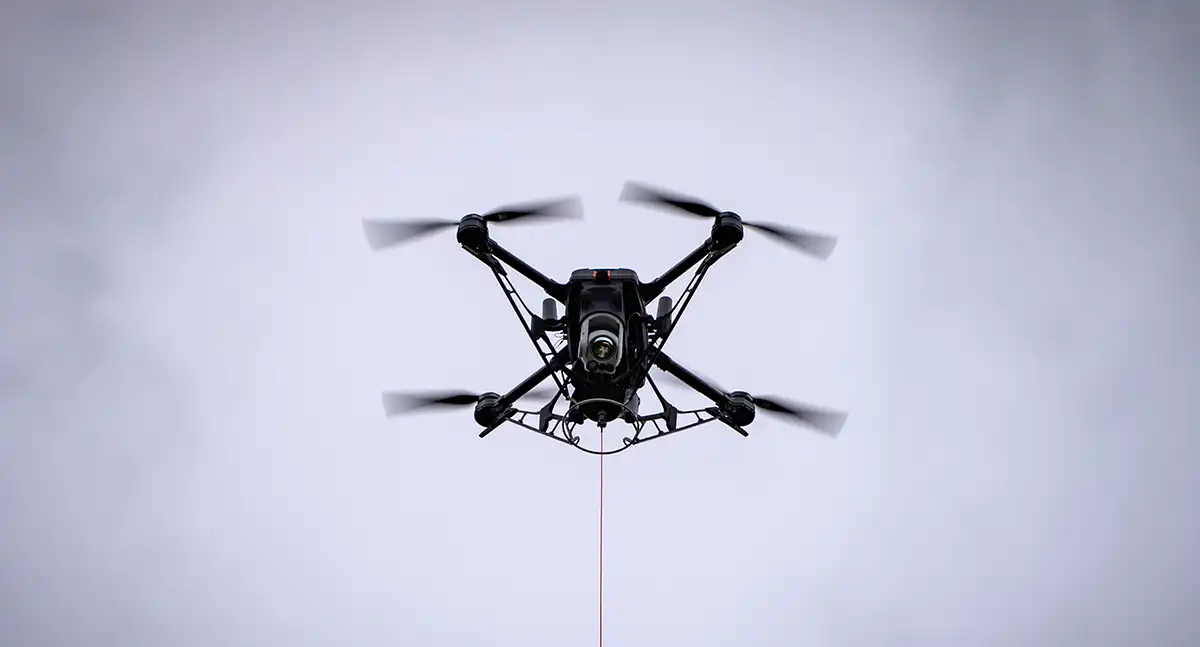
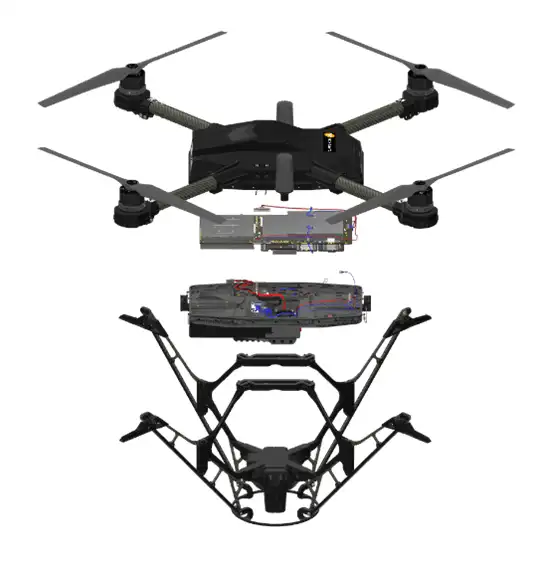
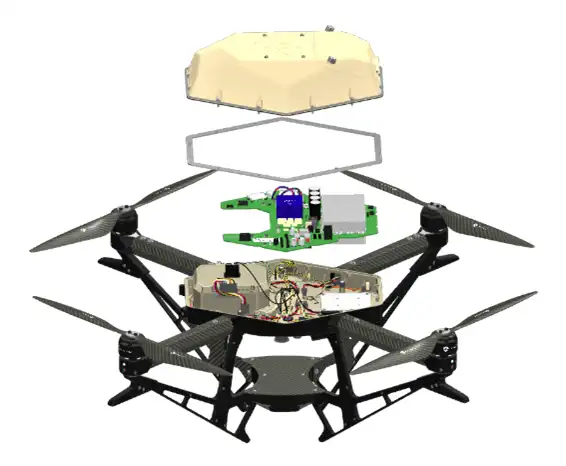
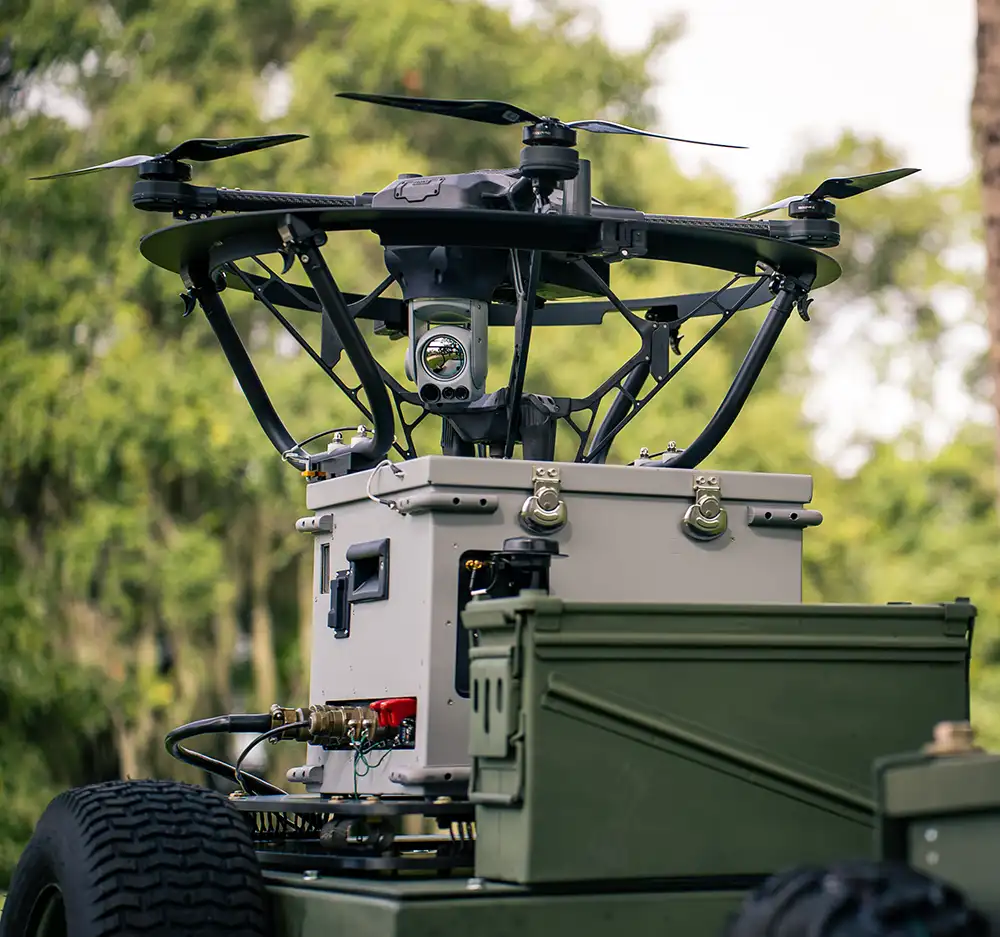
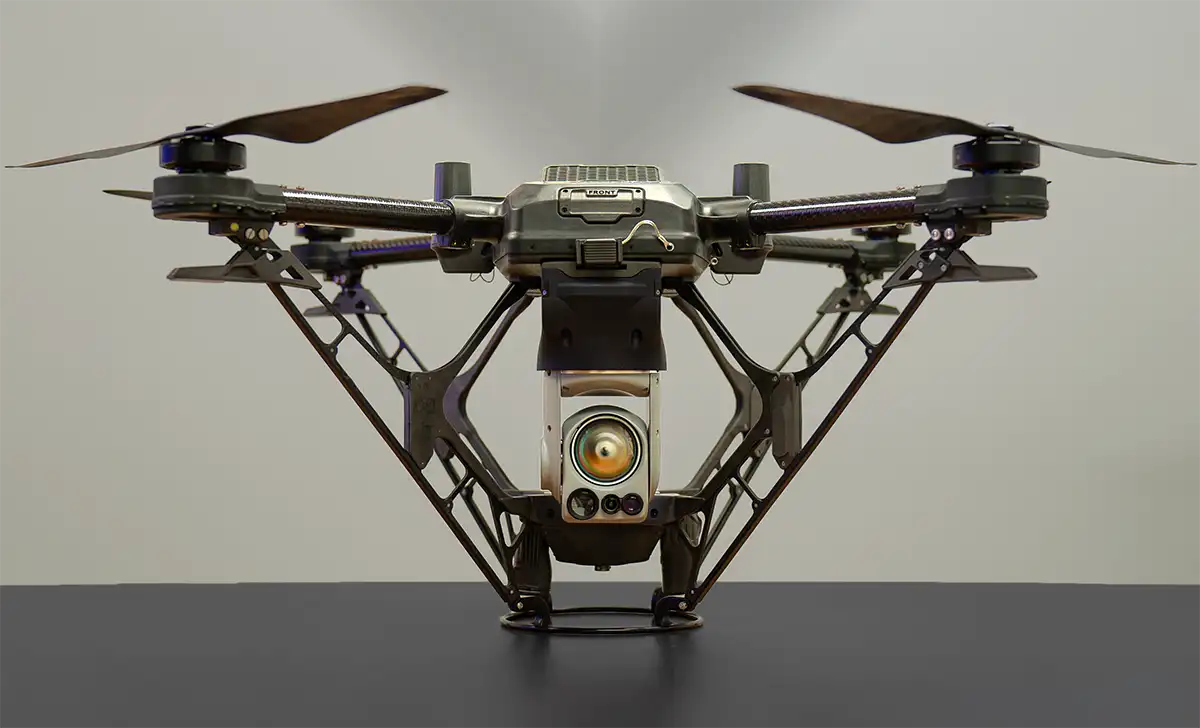
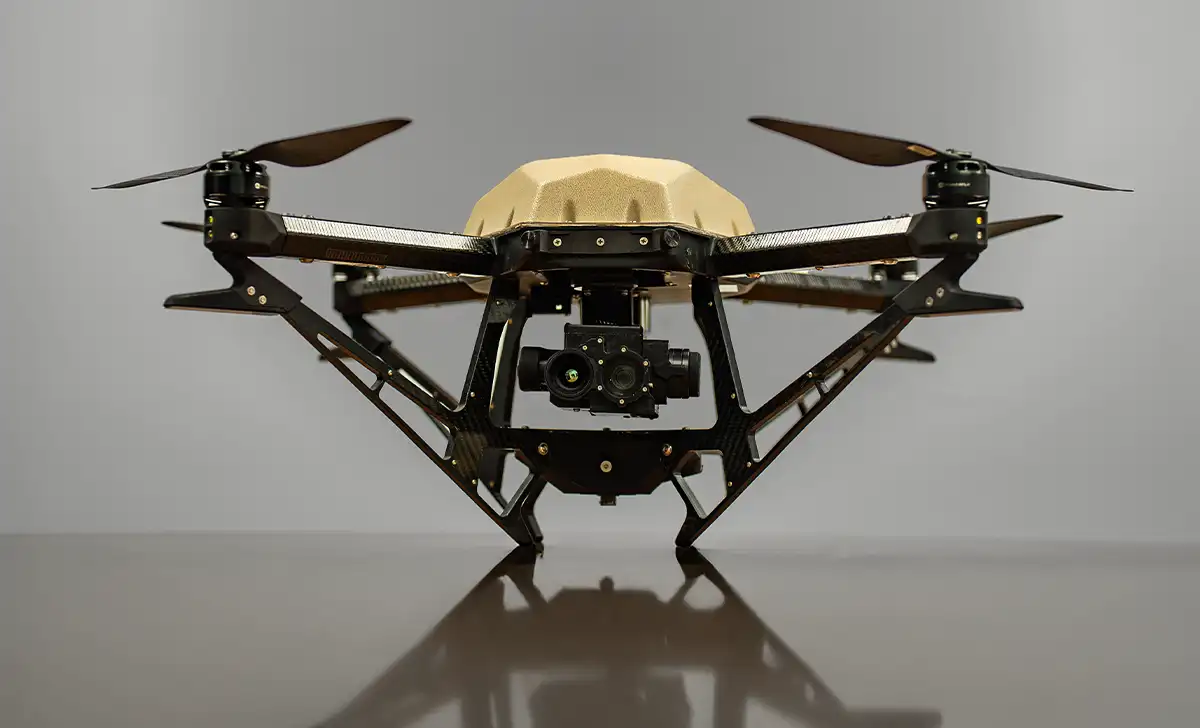
Hoverfly Technologies, leader in tethered drone solutions, partnered with CRP USA to manufacture the main fuselage for its Spectre 2.0 and Sentry platforms. The result was 3D-printed, end-use production parts, not prototyping or testing only, used on fielded systems. Designed by Hoverfly engineers and manufactured by CRP USA for long-term integration, not routine replacement.
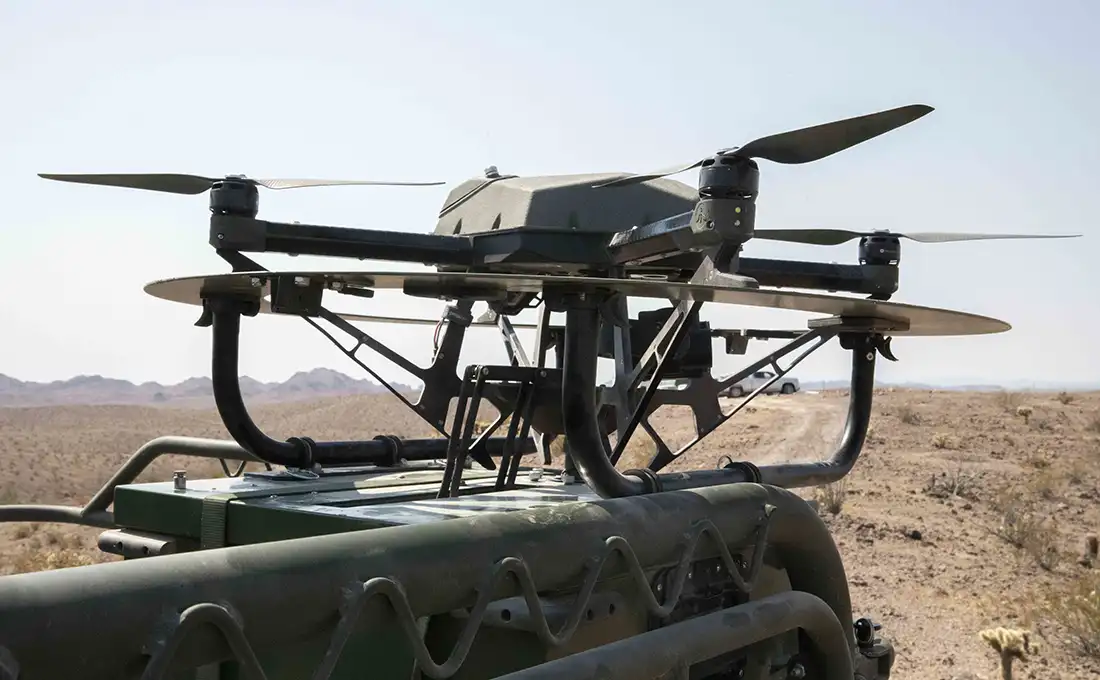
The collaboration with CRP USA enabled Hoverfly to develop highly specialized TeUAS platforms capable of operating in demanding military, security, and tactical missions, with structural solutions fully supporting multi-payload configurations, persistent ISR, advanced electronic warfare, and network extension roles.
Focus
A TeUAS (Tethered Uncrewed Aerial System) is a drone platform connected to a ground station via a power and data tether, enabling continuous flight, persistent surveillance, and secure real-time data transmission.
Complex geometries and rapid deployment needs
Hoverfly required lightweight, high-strength structural parts featuring complex internal geometries for embedded cable routing and optimized load paths. There requirements were combined with rapid production timelines for operational deployment and the ability to perform reliably in harsh environments: vibrations, temperature extremes (-20°C to +49°C), rain, dust, mechanical shocks.
Traditional manufacturing methods such as CNC machining and injection molding, could not meet these requirements.
3D Printing solution: material and process
Selective Laser Sintering (SLS) with glass fiber reinforced thermoplastic Windform GT enabled:
- Load-bearing structures with thin-wall designs
- Weight optimization without compromising strength
- Complex internal geometries impossible with conventional methods
- Fast production cycles meeting tight deployment timelines
- Full airframe integrity connecting booms and housing electronic components
Key engineering benefits
Function Integration
Structural, mounting and housing functions integrated
Reduced Part Count
Simplified BOM, fewer components to manage
Design Freedom
Complex routing, embedded channels, load paths
Faster Development
Accelerated iterations, quick cycles, shorter lead time
Lightweight and mechanical strength
Thin-wall sections ensuring strength and durability
MIL-STD Qualified
Validated performance under military standards
Military-grade qualification
All Windform GT components passed full MIL-STD-810H environmental testing.
Test | Reference |
|---|---|
Drop testing | MIL-STD-810H-C1, Method 516.8 |
Temperature cycling (-20°C to +49°C) | MIL-STD-810H-C1, Methods 501.7 / 502.7 |
Blowing rain and wind | MIL-STD-810H-C1, Method 506.5 |
Blowing dust (6h exposure, 49°C) | MIL-STD-810H-C1, Method 510.7 |
Continuous flight | 48-hour operational test |
All parts maintained full functional and structural integrity throughout.
Results achieved
The 3D-printed Windform GT fuselage structures proved structurally reliable and operationally robust in demanding mission conditions. The components ensured safe flight performance, optimized endurance through lightweight design, and reliable operation under harsh environments, while reducing part count and enabling modular system configurations.
Looking Ahead
Following the success of this collaboration, Hoverfly is actively exploring further additive manufacturing applications, including embedded EMI shielding, integrated thermal management, and smart structures for future TeUAS generations.