

DIGITAL VALIDATION FOR MANUFACTURING PERFECTION
How Magneti Marelli and CRP Redesigned Reliability
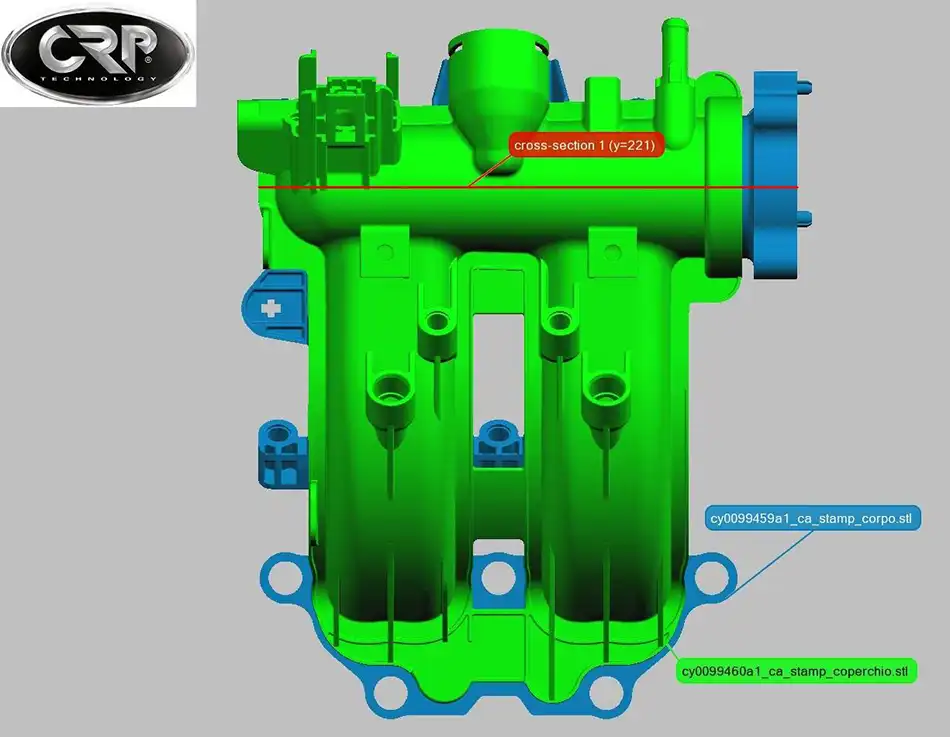
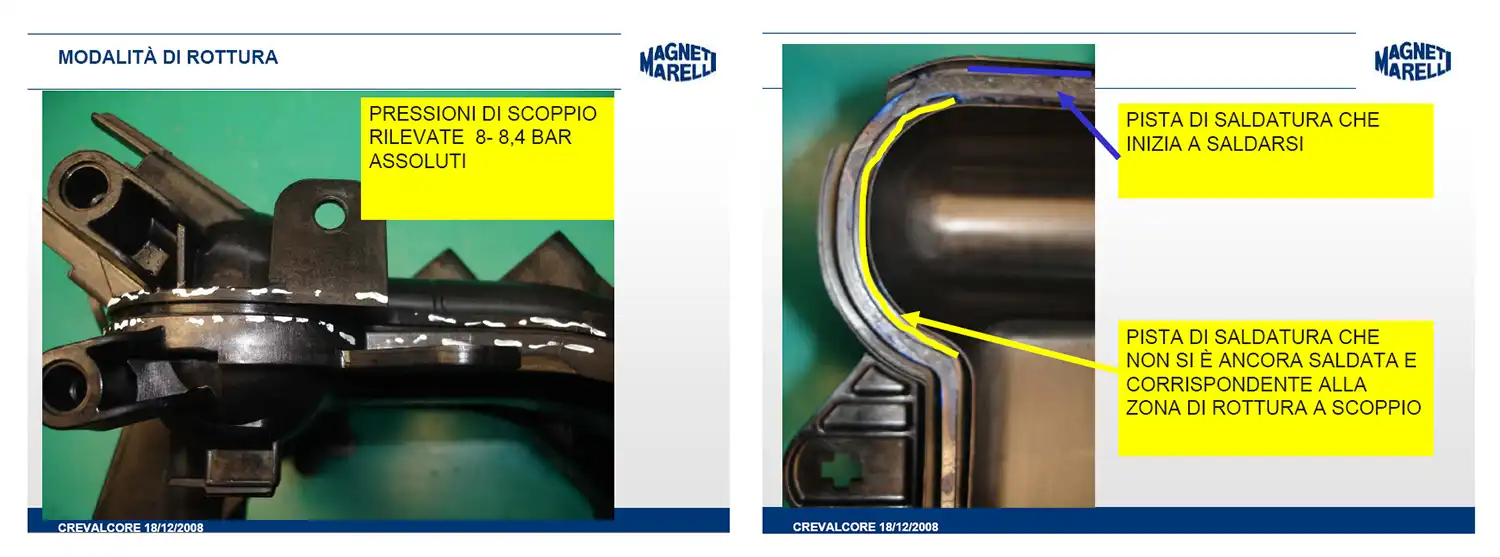
The CAB257 manifold, designed for a next-gen two-cylinder engine, was originally manufactured by vibration welding two halves injection-molded in PA66_GF35. But during burst testing, performance fell short. Inconsistencies in the weld bead hinted at part distortion – a risk to the long-term reliability of the product.
That’s when Magneti Marelli brought in CRP to apply its multidisciplinary expertise – blending simulation, reverse engineering, and digital inspection into a single optimization loop.
THE TECHNICAL HEART OF THE PROJECT
Initial Diagnosis: Weld Failure
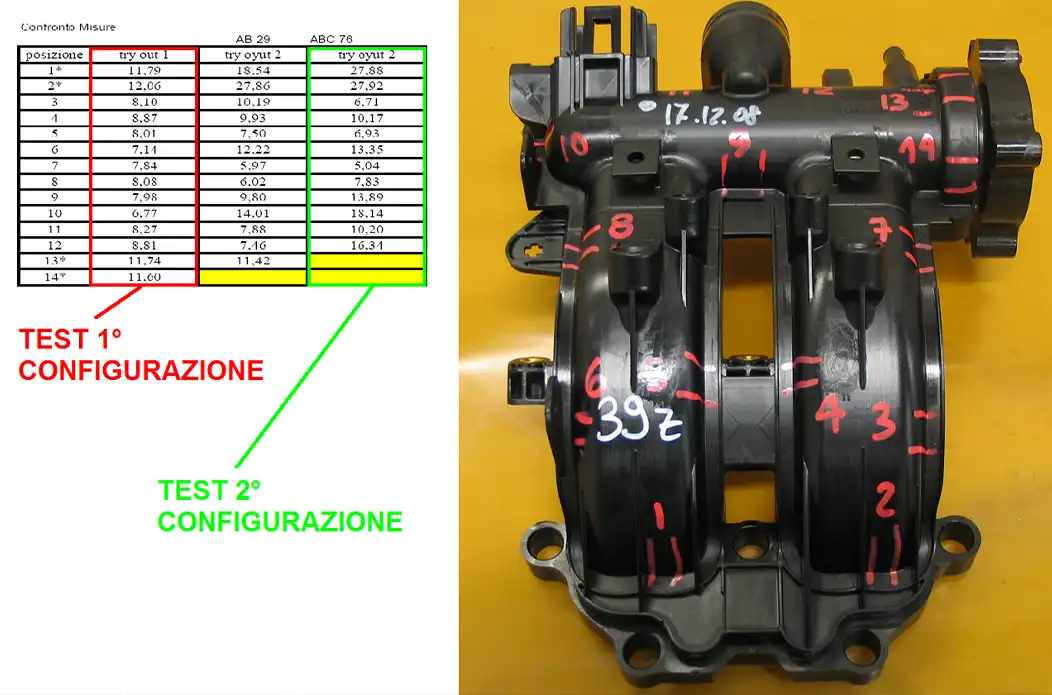
Pressure testing exceeded expectations – but not without issues. Failed units showed non-homogeneous welds caused by subtle geometric mismatches in the two molded halves. Visual inspection confirmed uneven seams and internal stress points.
Tensile tests on 14 weld samples confirmed the inconsistency. The integrity of the weld bead was compromised by part deformation after molding.
Virtual Tools, Real Solutions
To validate the cause, CRP ran a Moldflow simulation on the original molding process. The simulation confirmed warpage – especially along the weld interface. Before any process changes, a digital twin of the real parts had to be created.
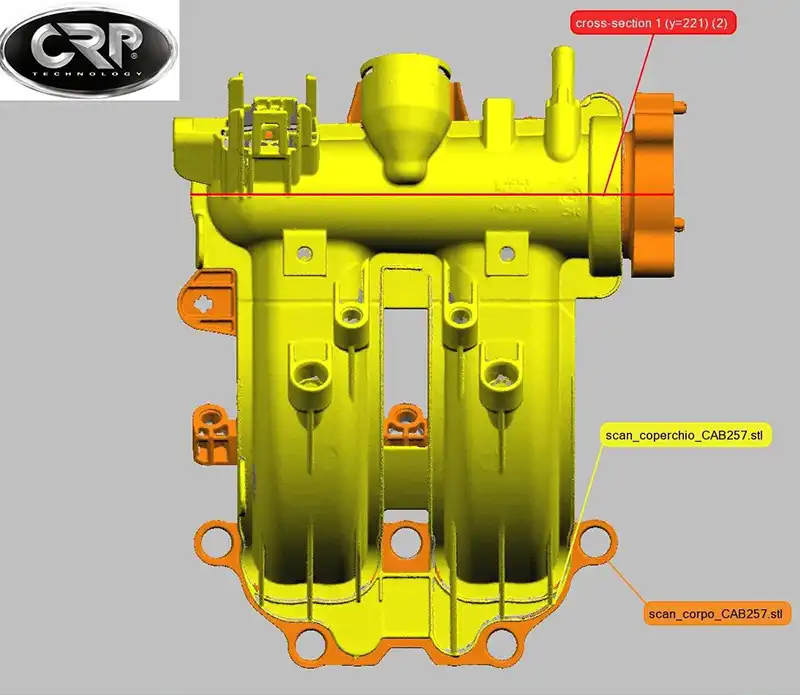
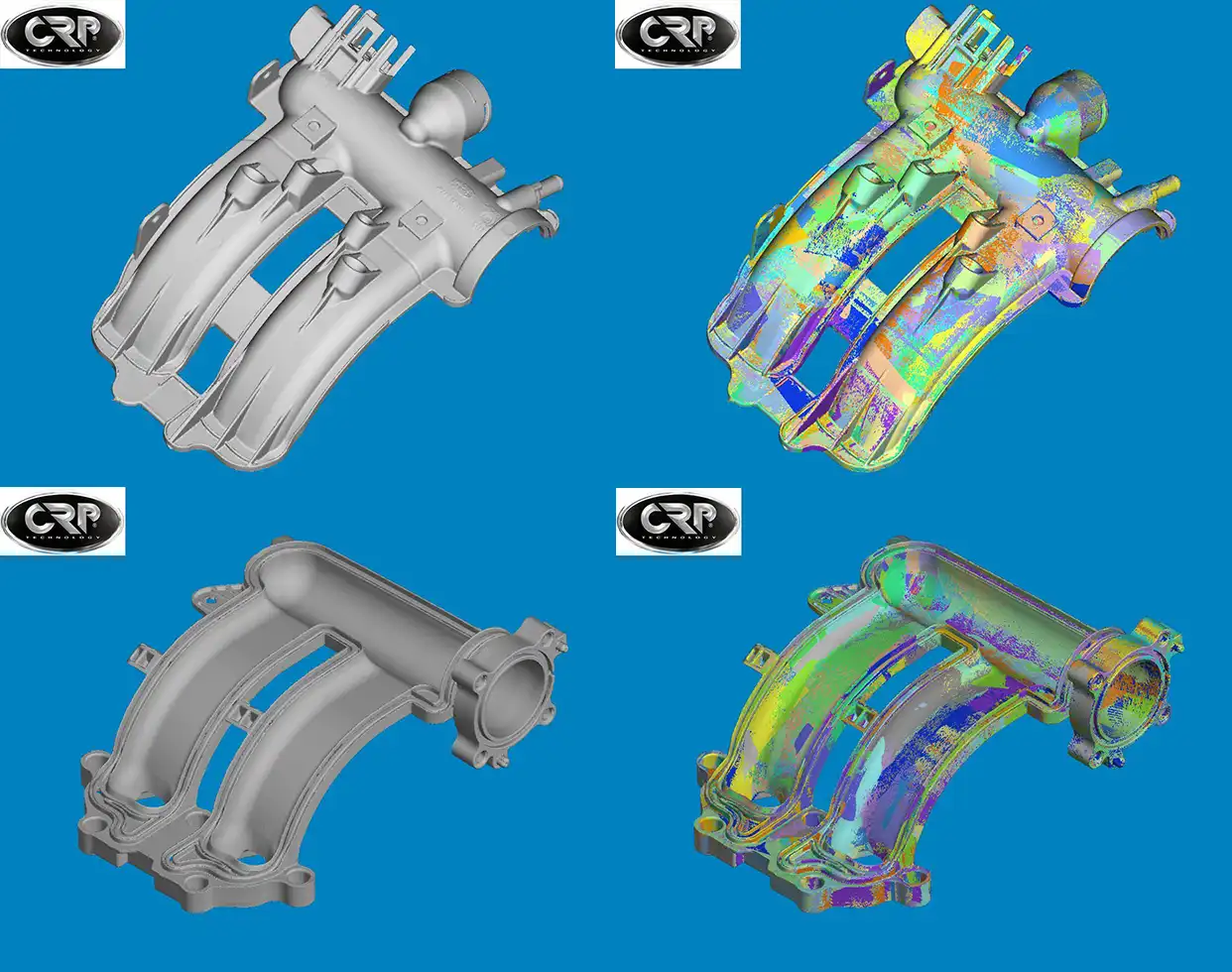
CRP performed 3D optical scanning of the physical parts using a 7-axis measurement arm with laser system, capturing over 7 million data points per part. Compared to traditional measurement tools, this level of detail enabled a complete surface map.
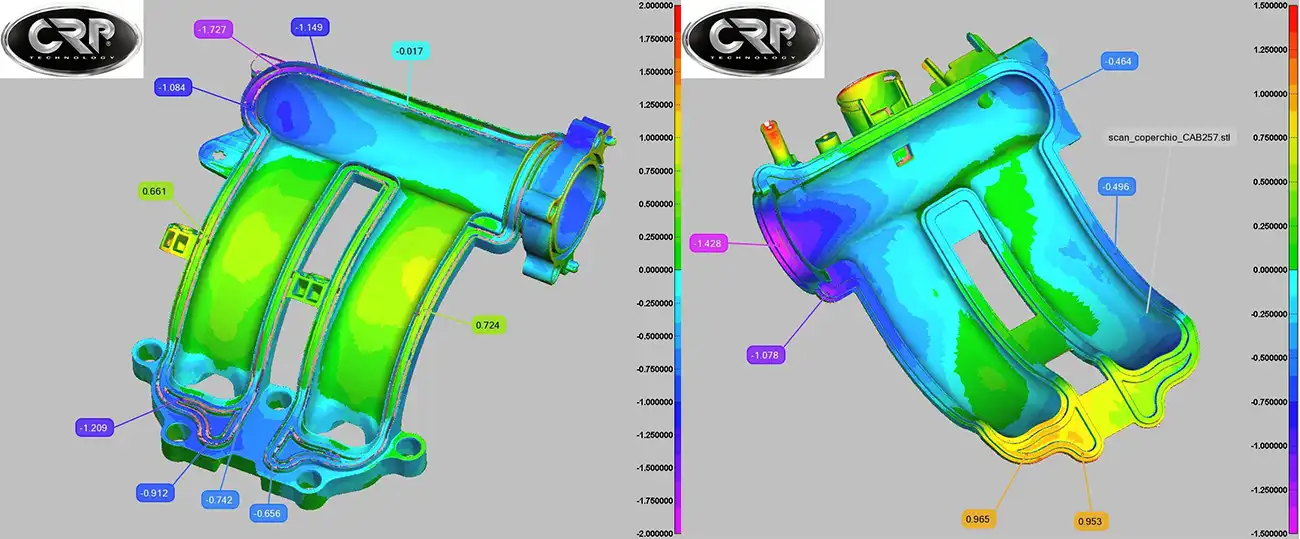
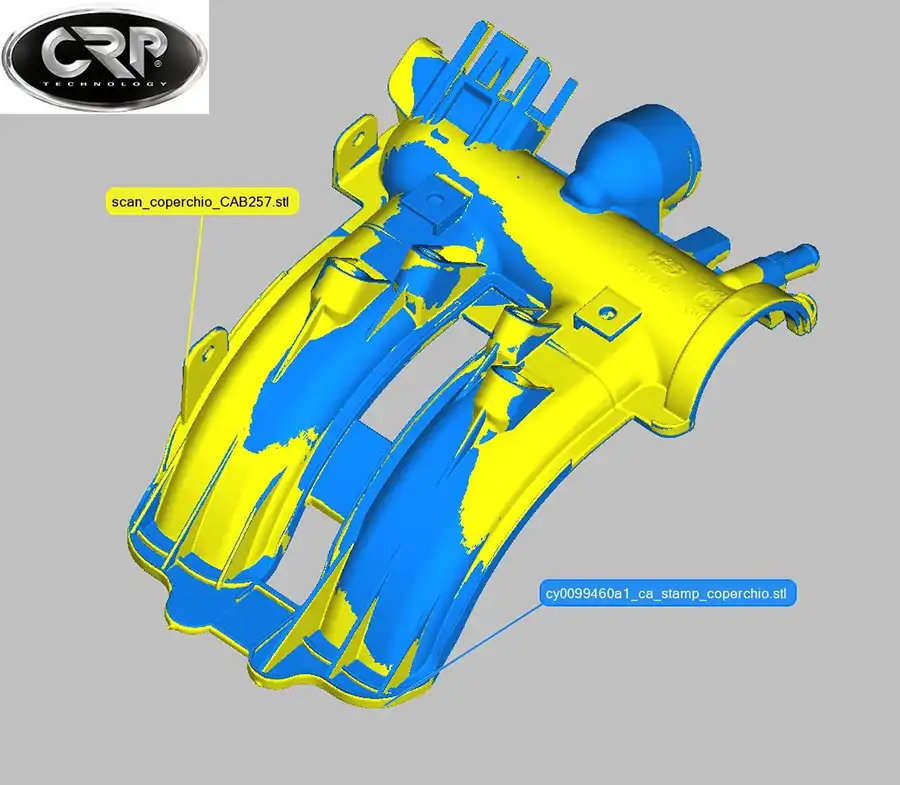
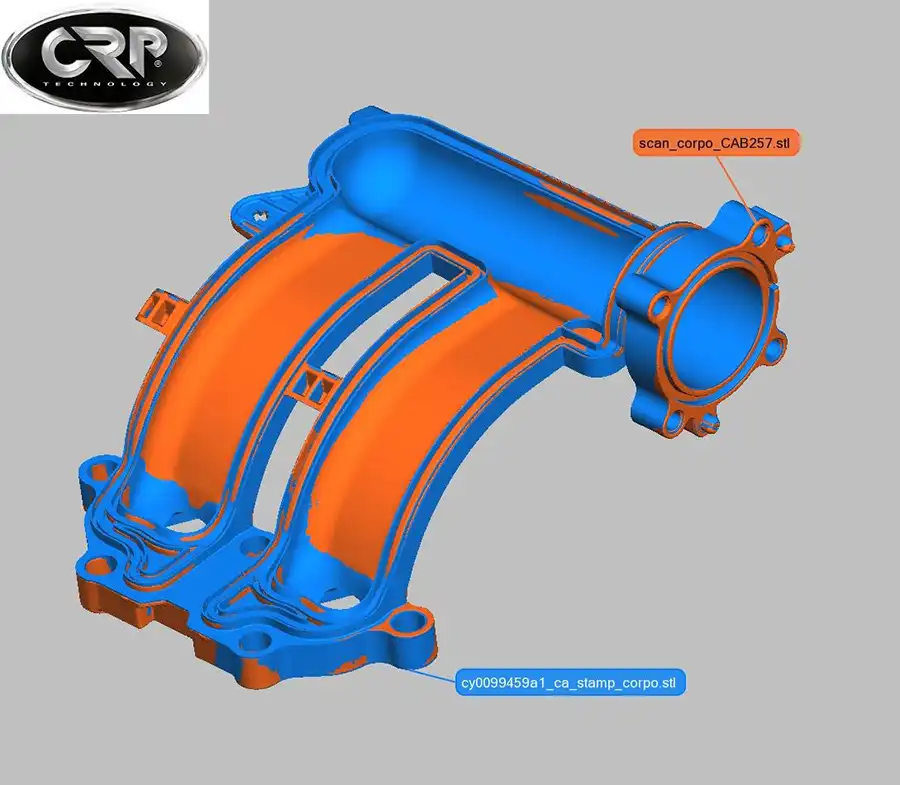
The 3D data was aligned via best-fit comparison to the CAD model. Warped areas along the weld line were immediately visible and quantified, showing gaps and mismatches that explained the test failures.


From Virtual Inspection to Process Tuning
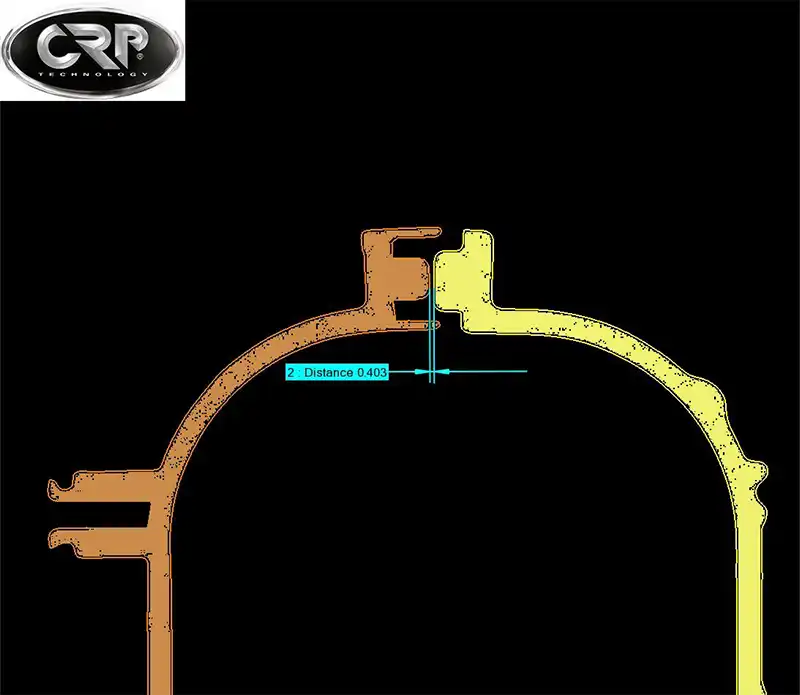
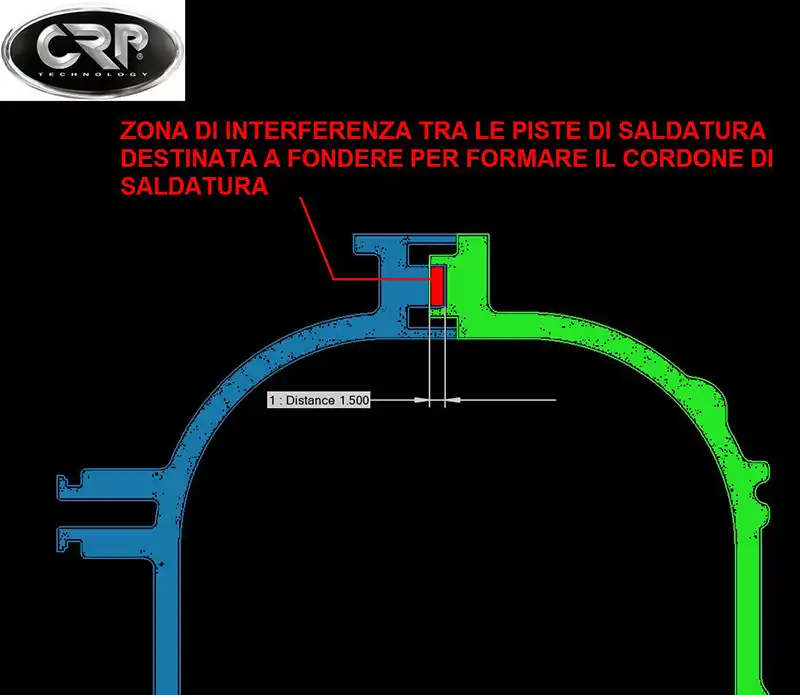
By digitally reconstructing the weld line geometry, CRP pinpointed the material interference gap – originally engineered at 1.5 mm but reduced to just 0.4 mm in the molded parts due to warpage. This mismatch prevented effective welding.
CRP used this insight to calibrate the Moldflow simulation, using real deformation data to enhance its predictive power. Magneti Marelli then redefined injection molding parameters, modified tool settings, and created a new batch.

VALIDATION THAT DELIVERS RESULTS
The new molded parts were welded and tested. Pressure resistance improved by over 1 bar. Tensile strength in critical weld zones doubled or tripled.
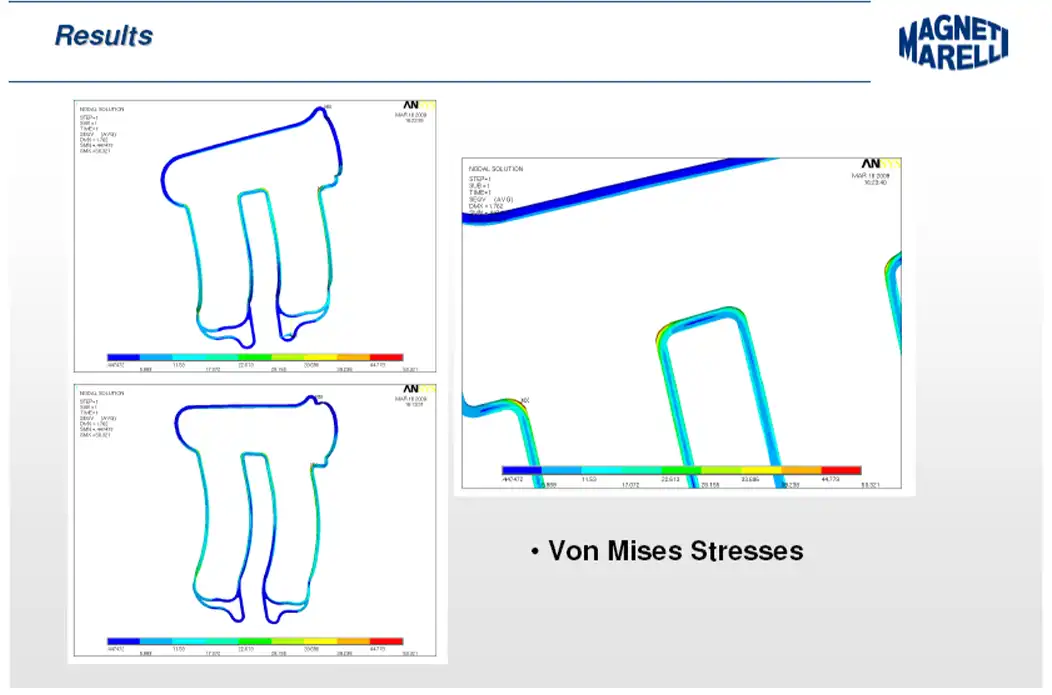
A FEM structural analysis verified that the redesigned geometry and measured weld strengths met mechanical requirements across all operating conditions.
CRP’s closed-loop workflow –scan → analyze → simulate → correct → validate – enabled faster troubleshooting and a robust fix.
A New Digital Quality Control Standard
Pressure testing
Tensile strength testing
Moldflow simulation
3D scan-to-CAD comparison
FEM structural validation
The outcome: stronger welds, better-performing parts, and reduced risk in the field.
FROM PART TO SYSTEM: DIGITAL MOCKUP VALIDATION
After solving the weld issues, Magneti Marelli provided CRP with a complete test manifold, accessories included. CRP scanned the final assembly and integrated it into a virtual mockup of the engine bay.
This ensured mounting accuracy and ruled out potential interferences – without physical trial and error.
Reverse Engineering proved to be a fast, effective tool for plastic part testing and optimization, closing the loop from design to production in a fully digital environment.