
ENGINEERING THE CORE OF PERFORMANCE
Battery Housing Built for Speed, Safety, and Series Production
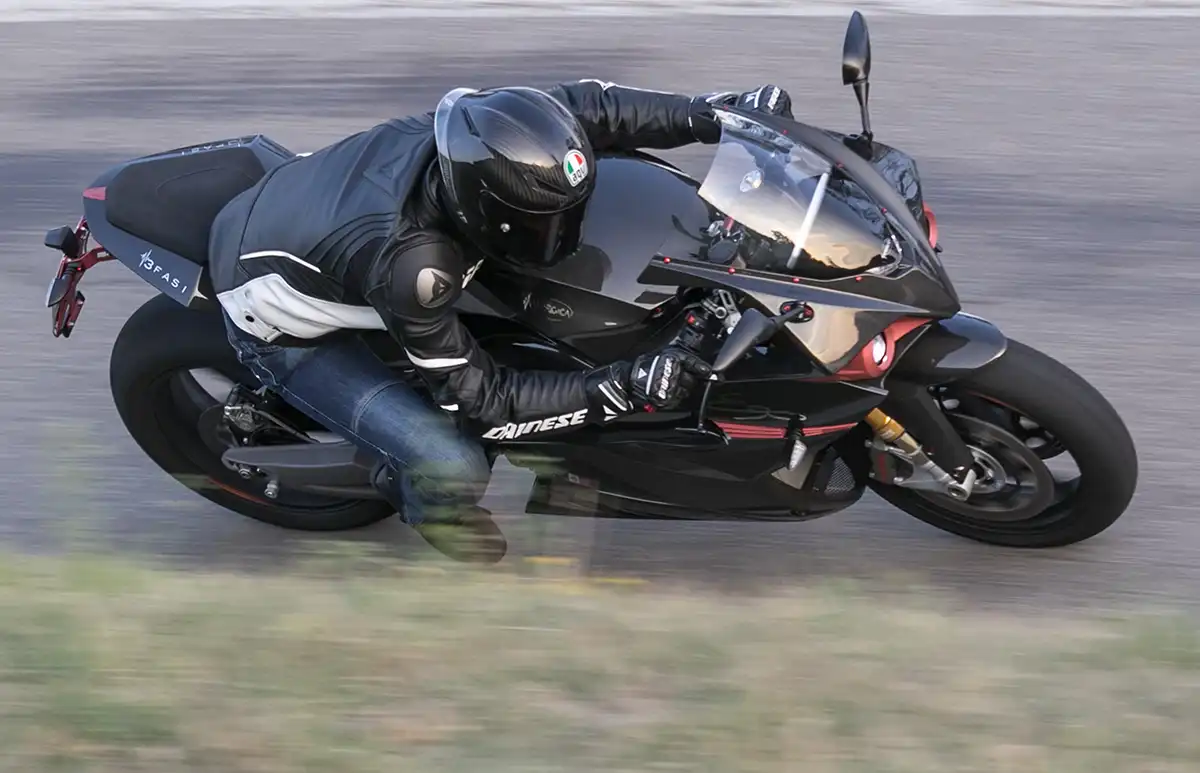
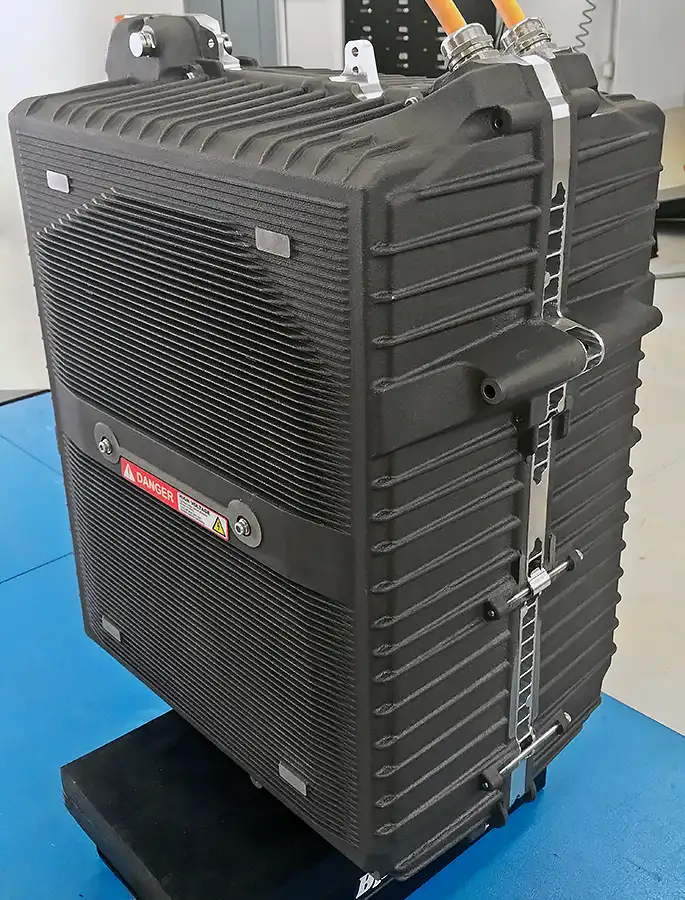
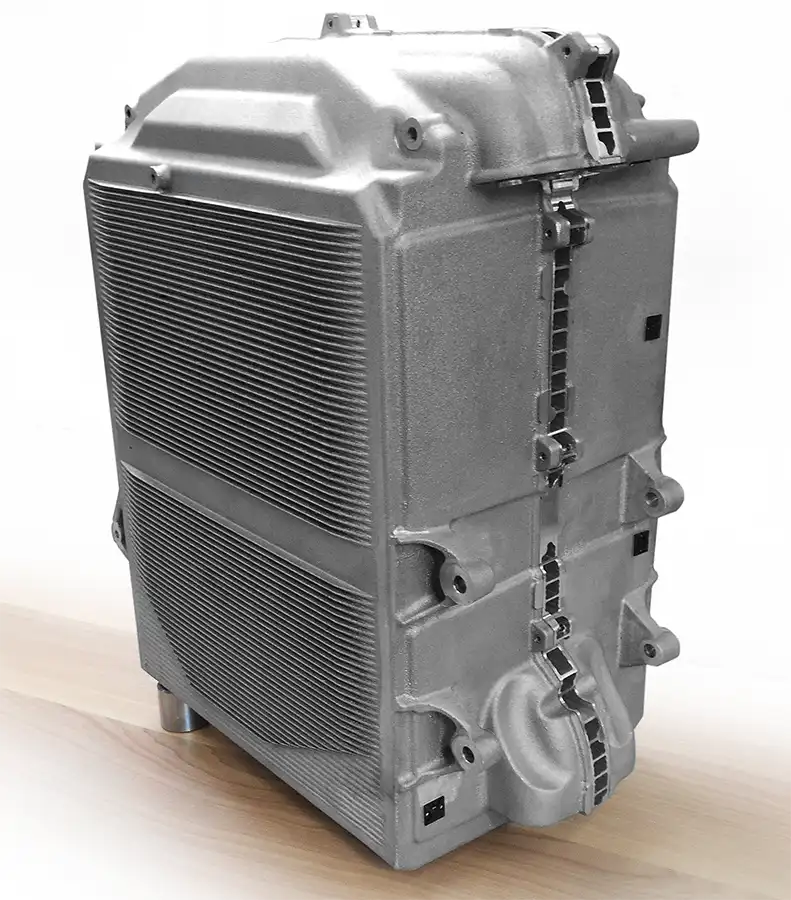
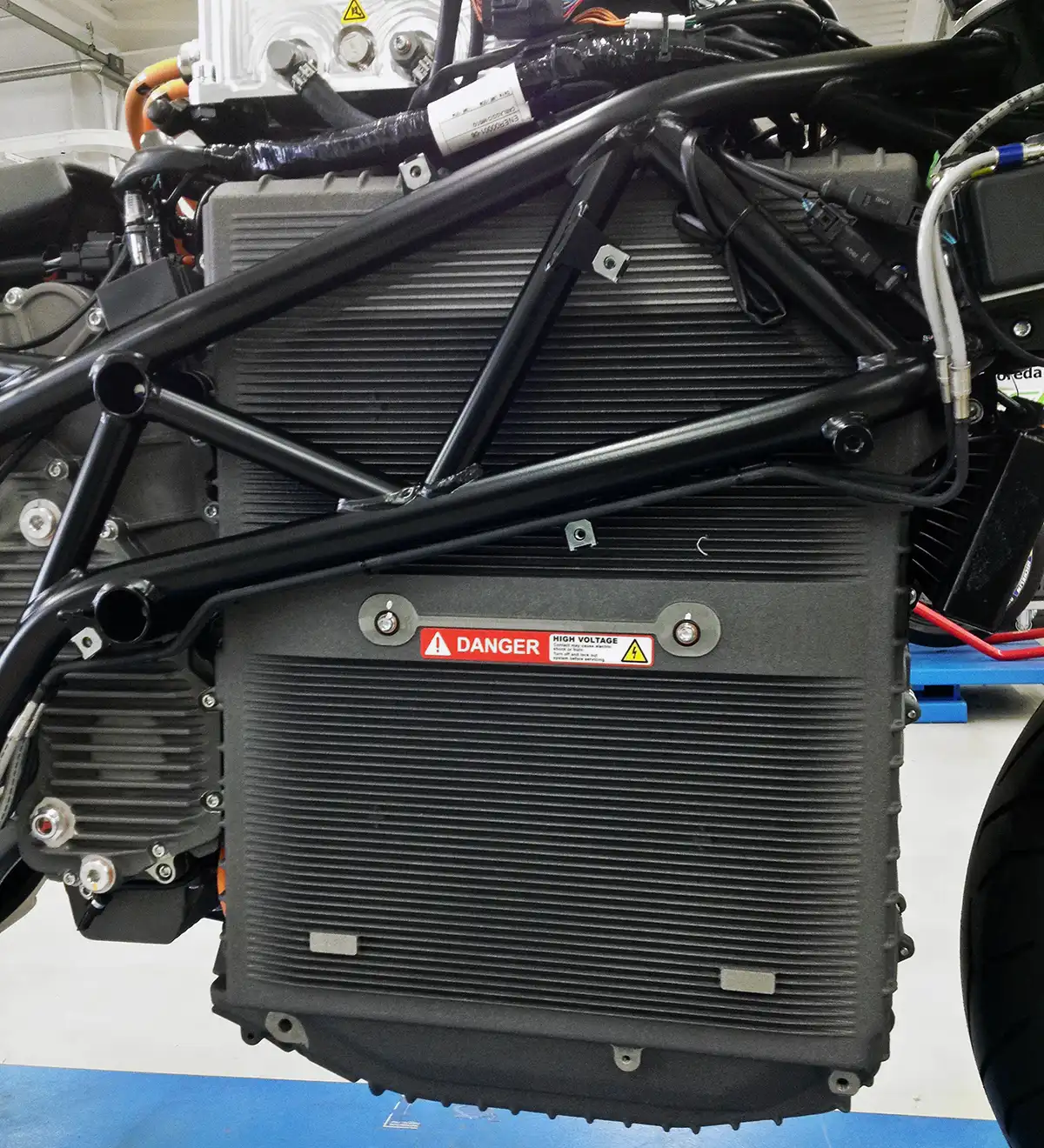
CRP Meccanica and CRP Technology teamed up with Energica Motor Company to develop the battery housing system at the heart of their electric motorcycles. This isn’t just a casing – it’s a multi-functional sealed enclosure designed to contain and protect high-voltage battery cells and the Battery Management System (BMS).
The unit had to perform under acceleration and fast charging, while remaining electrically safe, thermally stable, mechanically strong, and ready for EMC testing. It also had to be brought into series production on a tight schedule.
Integrated Engineering Value
Engineering activities developed and coordinated within CRP’s multidisciplinary teams, integrating structural, thermal and dynamic considerations into battery housing development.
Thermal strategy maintaining optimal 20–50°C operating range
Packaging evolution increasing energy density while reducing system weight
Center-of-gravity optimization validated through simulation and physical testing
Battery engineered as a dynamic mass contributor influencing handling balance
THE TECHNICAL HEART OF THE PROJECT
Phase 1. Functional Prototype via Additive Manufacturing
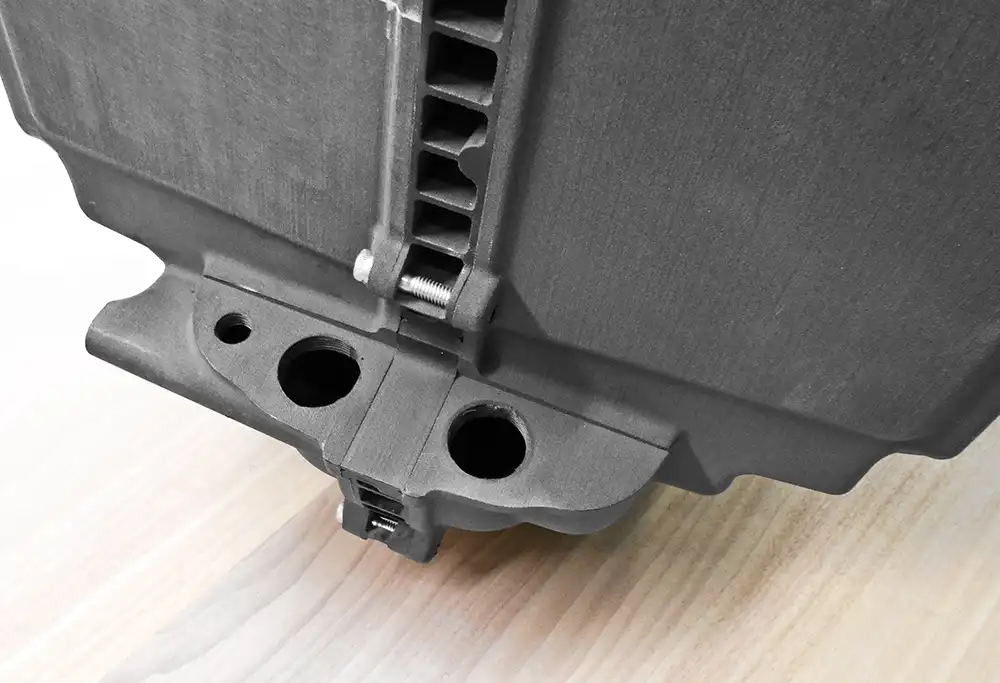
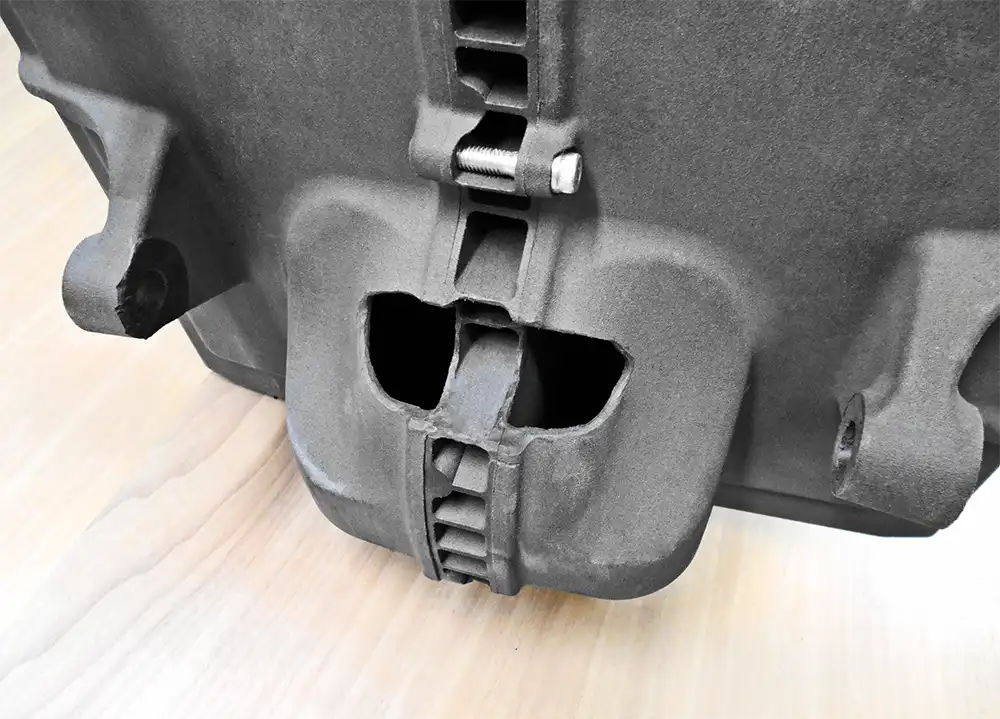
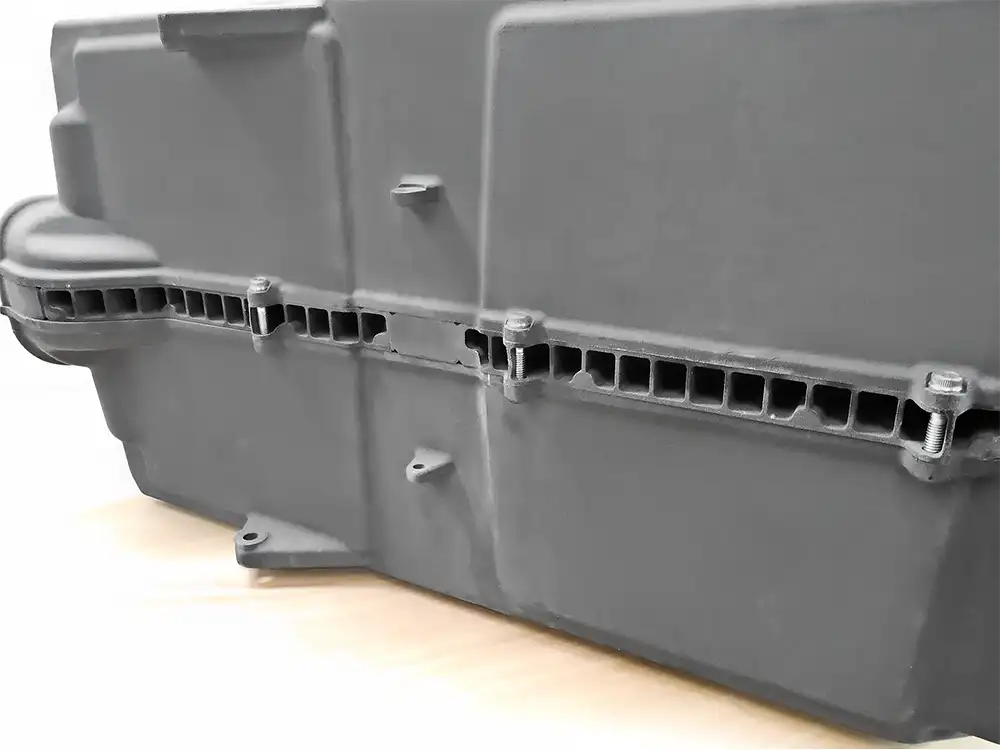
The development began with a full-scale prototype produced by Selective Laser Sintering (SLS) 3D printing using Windform LX 2.0, a glass fiber-reinforced polyamide. Chosen for its high temperature resistance and electrical insulation, this material allowed direct R&D and testing on a working component.
Thanks to the large-format 3D printing systems at CRP Technology (build size: 550 x 550 x 450 mm), the team was able to print the entire prototype in one piece – an uncommon capability among service providers.
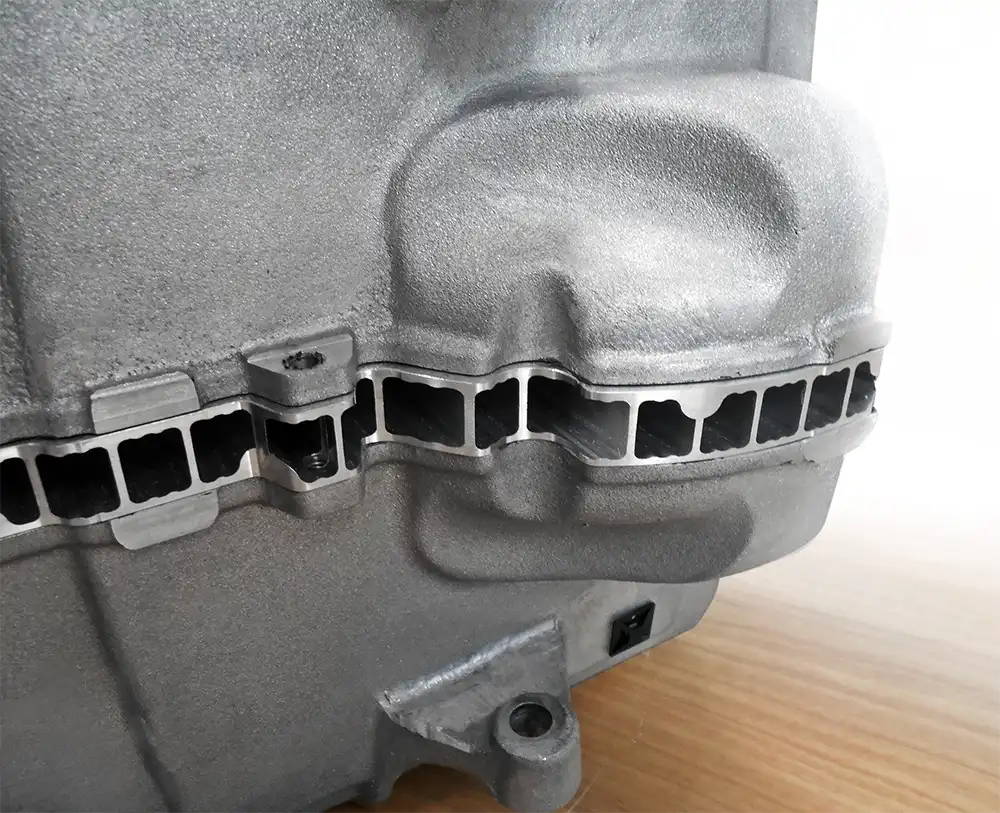
The prototype included the central septum, an aluminum plate integrated into the final product, which directs airflow to prevent battery overheating during acceleration or fast charging.

Phase 2. CNC Machining of Aluminum Rapid Casting
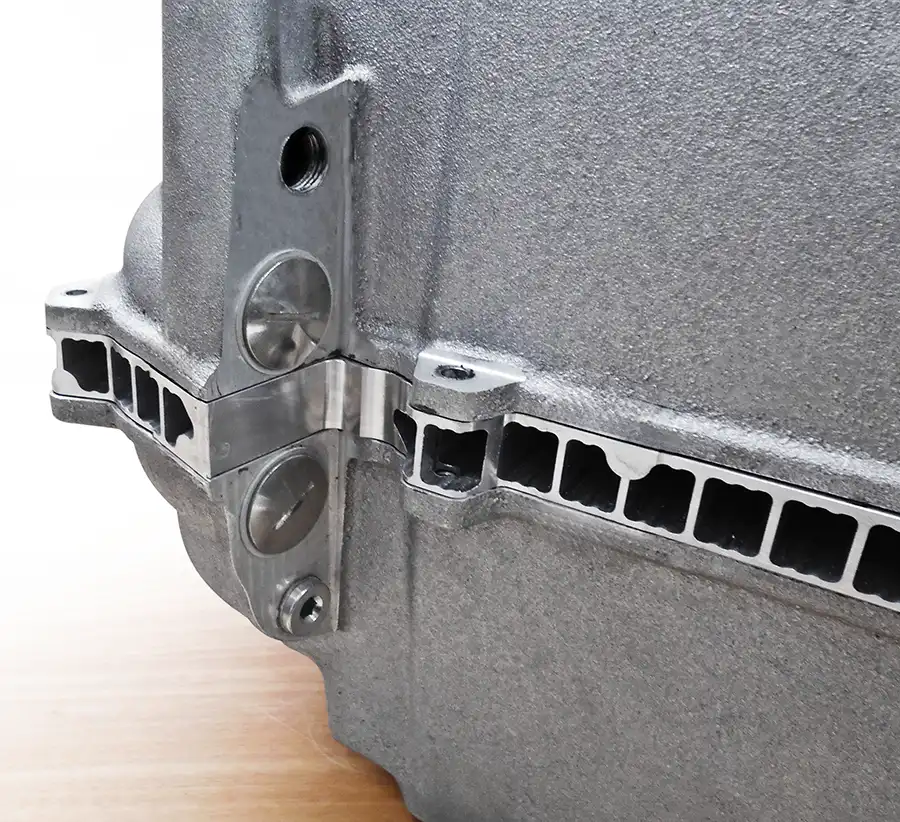
The second step was a rapid casting of the battery housing in aluminum, followed by precision CNC machining at CRP Meccanica. The structure – made of two shells – had to maintain dimensional accuracy, resist distortion, and be safe in case of motorcycle impact.
CRP optimized the casting geometry for process stability and worked with Energica’s chosen foundry, sharing simulations and process parameters. The result: a precise aluminum housing that met all of Energica’s safety and performance criteria.
Phase 3. Industrial Production via Sand Casting
For production, the process evolved into traditional sand casting, using the same aluminum alloy. Thanks to the refinements made during prototyping, no rework or delays occurred. CRP’s contribution in phase 2 directly enabled a smooth, scalable manufacturing process.
Performance Improvements
Full high-voltage containment
Structural safety in case of falls
Integrated EMI shielding, eliminating the need for additional testing
The sealed aluminum design allowed Energica to pass EMC certification on the first attempt – reducing costs and speeding up market entry.
NO MARGIN FOR ERROR, ONLY SOLUTIONS
CRP’s combination of advanced prototyping and precision machining made the impossible possible. Energica challenged us with high-tolerance, high-risk demands. We delivered at every step.
We don’t just make parts. We solve problems that others can’t touch.