
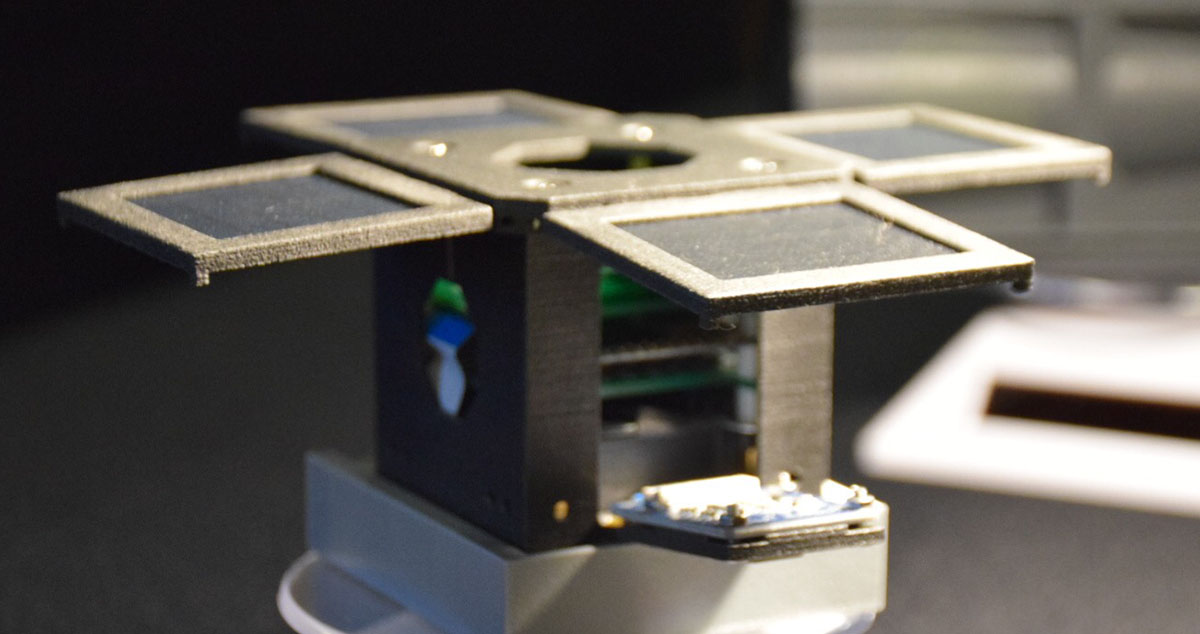
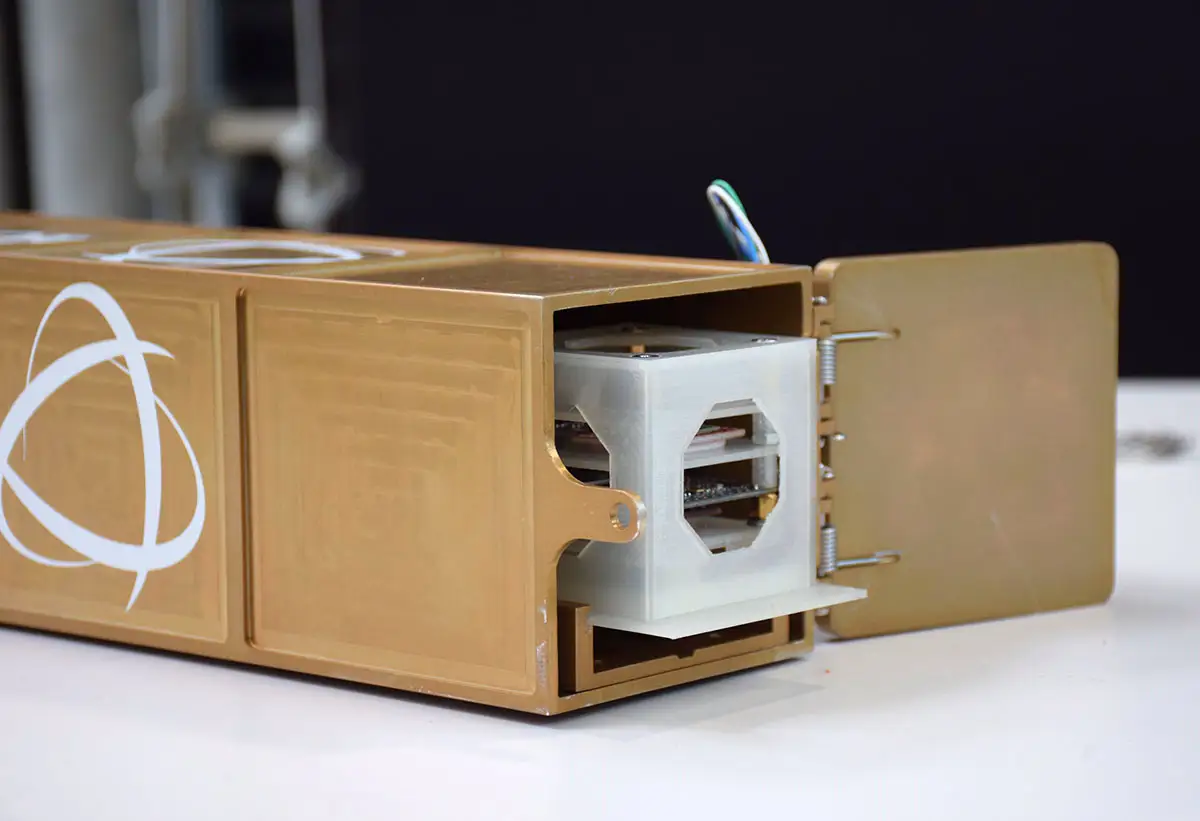
Mini-Cubes LLC was founded in 2018 to take the concept of a PocketQube – a super small satellite – and develop it into a viable product. Joe Latrell, CEO of Mini-Cubes, and his team did this on the principle that virtually anyone can reach space today. With PocketQube satellites, they hope to achieve a better grasp on Earth’s resource monitoring and give the public a chance to be among the stars.
The Project
Recently Joe Latrell and his team started a new project based on a new 1P PocketQube flight-ready, named Discovery.
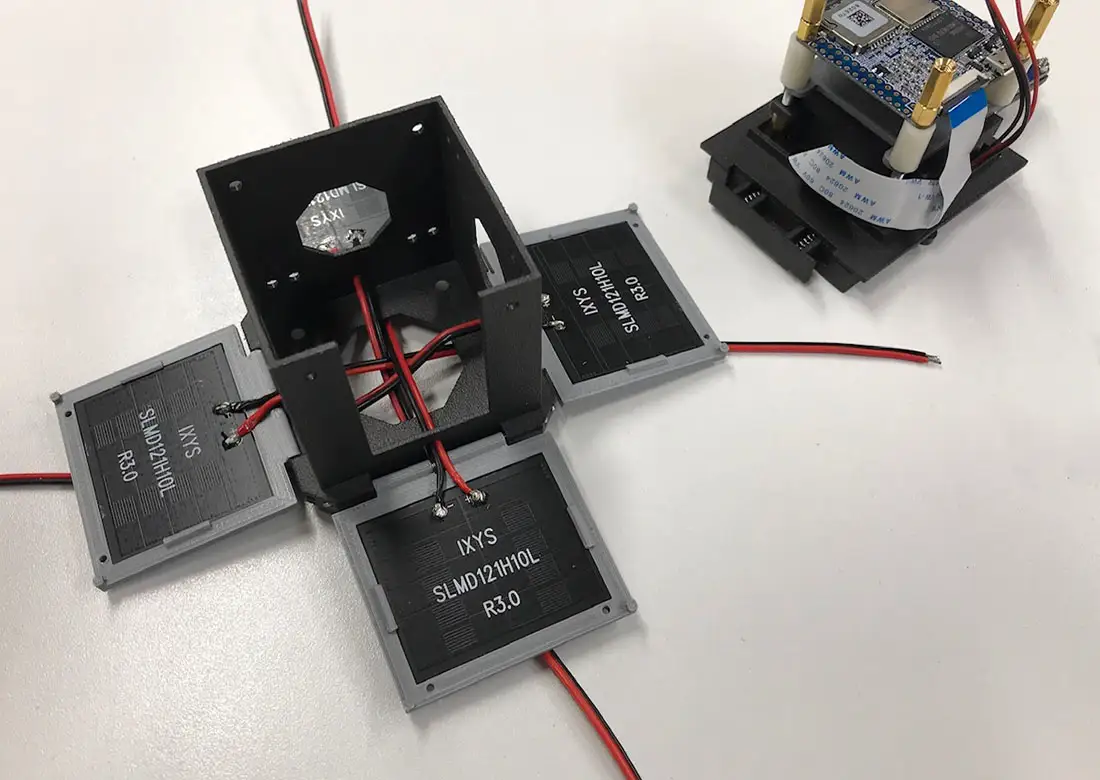
He turned to CRP USA for the manufacture of the entire satellite frame via Additive Manufacturing.
The primary objective of the project was proof of concept for satellites this small.
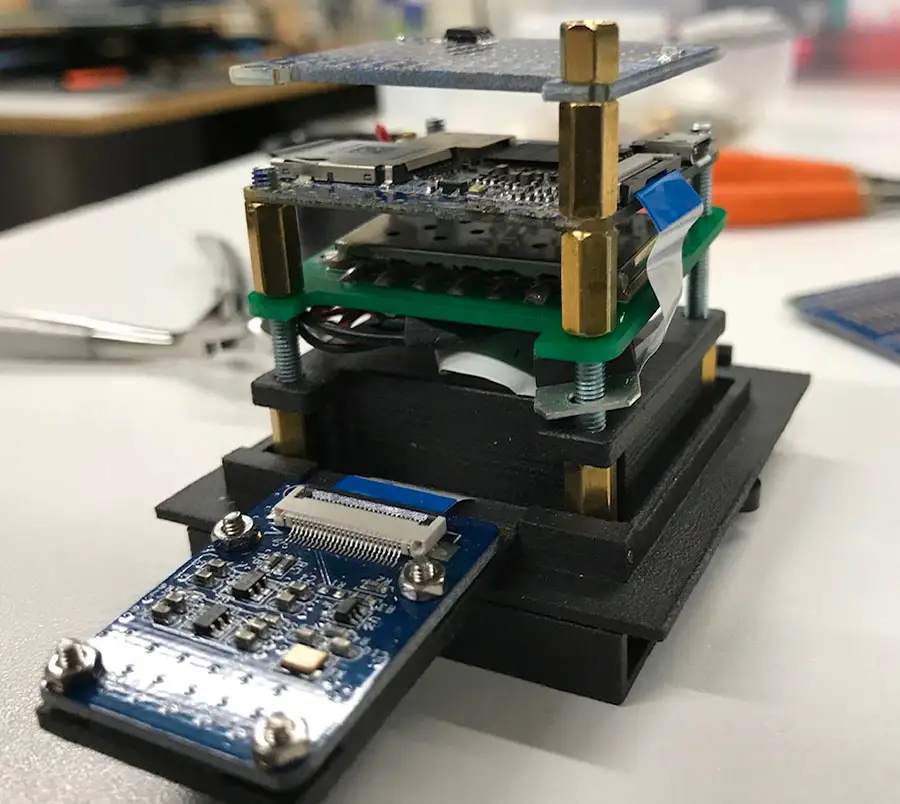
Joe Latrell explains, “We wanted to include a camera for visual observation, again just to see if it could be done. If the process works, we see using the technology to create a constellation of PocketQube satellites just for monitoring a specific resource. In our case that resource is water.”

Joe went to professional 3D printing since he has been a fan of Additive Manufacturing for some time now, as he explains, “I first used the process for making prototype rocket fins when I worked at an aerospace company.”
“When we started working on Discovery, I knew I wanted to push the boundaries of what was possible – everything from the small satellite form factor to the technology used to make it. For that reason I decided to involve CRP USA team and their Director of Operations, Stewart Davis. I knew that with their expertise and experience in the sector, they would be the ultimate technological partner for the project!”
Challenge
The main challenges were related to the small dimension of the satellite and to the material – since it was the first time that an entire satellite would be built from a Carbon-composite material.
Joe Latrell comments, “Discovery is a PocketQube satellite. These are spacecraft that are as small at 50mm x 50mm x 50mm internal volume. Our particular satellite is a demonstration of what can be done for remote sensing of Earth’s resources on that scale. The challenge with something so small is to fit the electronics, camera, and radio system into it.
The assignment was tough – the Windform® parts in the Discovery would be mission critical.
As Joe Latrell clarifies, “This was the first time an entire satellite would be manufactured from a material like Windform® XT 2.0. Performance is everything. If any one of the parts fail, it would result in complete failure of the spacecraft.”
Thanks to the long-term experience gained in the field of Additive Manufacturing service alongside the key leaders of the most advanced industrial sectors CRP USA accepted the challenge and won it.
“Joe’s team brings a unique challenge as they are packing a lot in a small package. Our team was able to use our experience with Windform® to help move the project forward,” stated Stewart Davis “Adapting to new and complex applications has become key to CRP USA’s further advancement.”
For the manufacture of Discovery 1a, Joe Latrell and CRP USA staff decided to use Carbon-fiber reinforced Windform® XT 2.0.
As Joe comments, “The combination of strength and ease of use made the material a natural choice for us. We knew we wanted to use additive manufacturing for Discovery but understood that it would be hard to find something that would work in the harsh environment of space. We discovered Windform® XT 2.0 and after looking at its properties, it was a simple choice.”
Windform® XT 2.0 replaces the previous formula of Windform® XT in the Windform® TOP-LINE family of composite materials.
Windform® XT 2.0 features improvements in mechanical properties including +8% increase in tensile strength, +22% in tensile modulus, and a +46% increase in elongation at break. These mechanical properties have guaranteed the achievement of the required characteristics, i.e. stiffness, low mass as well as very smooth surface finish.
Moreover Windform® XT 2.0 has passed outgassing tests at the most important Space Agencies, and it’s suitable for space missions.
Result / Testing
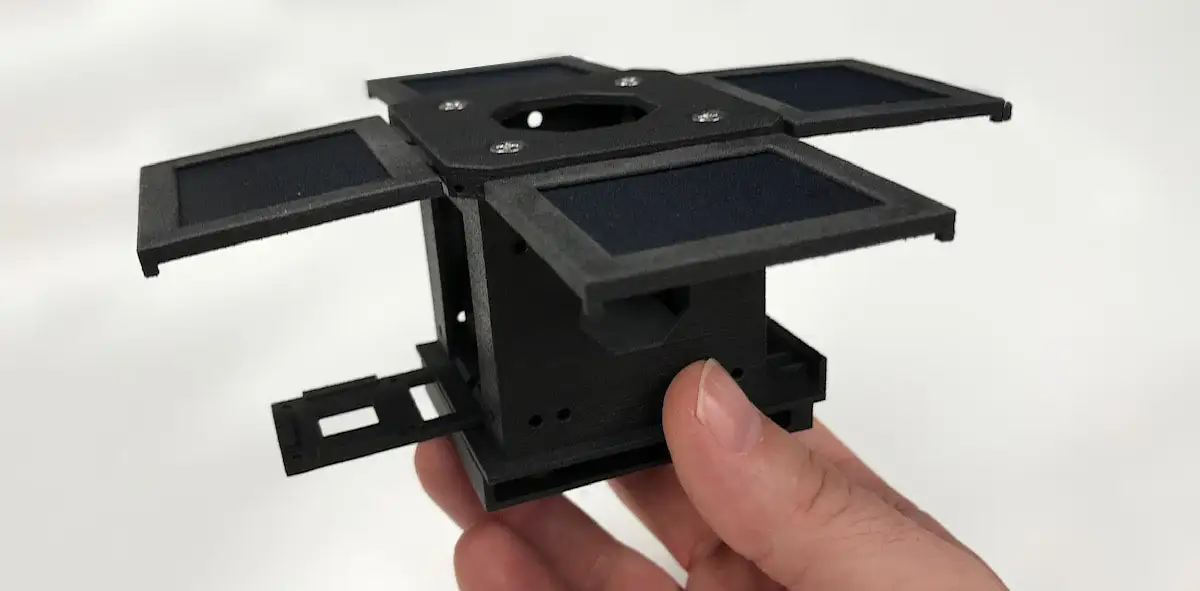
CRP USA manufactured for Mini-Cubes three 1P PocketQubes functional prototypes: two for testing and one for flight.
CRP USA Laser Sintering process combined with Windform® XT 2.0 Carbon-composite material, proved to be the best choice: the 3D printed 1P PocketQubes functional prototypes have successfully passed the control and testing criteria and have fully complied with the requests and Mini-Cubes’ standards.