
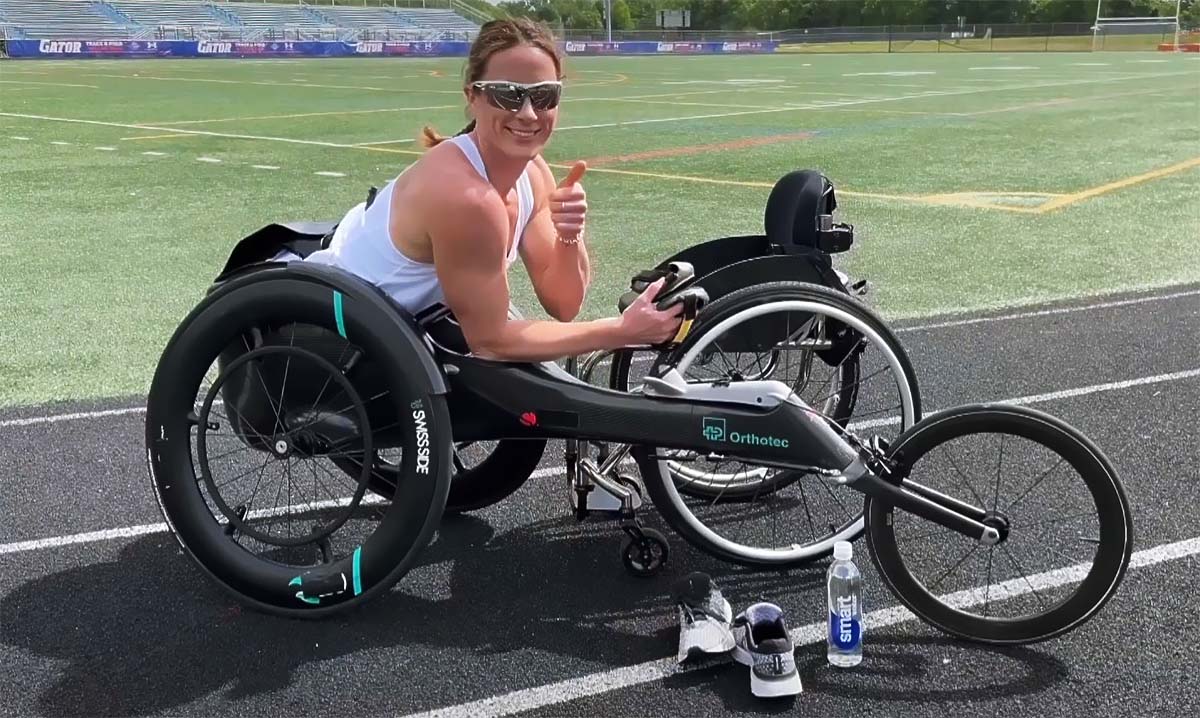
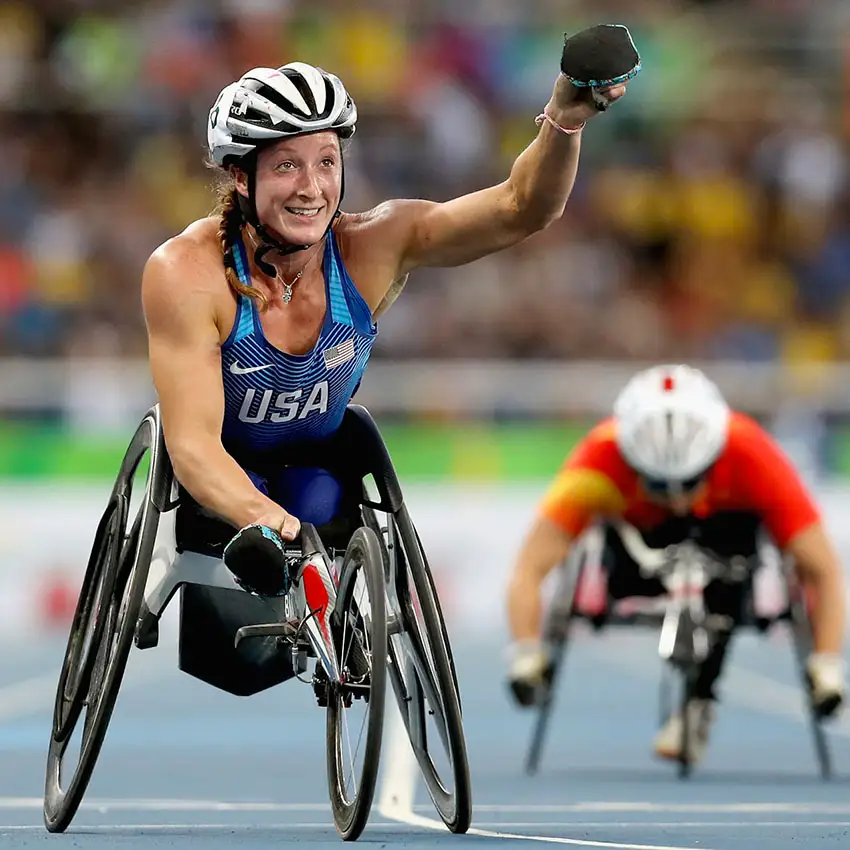
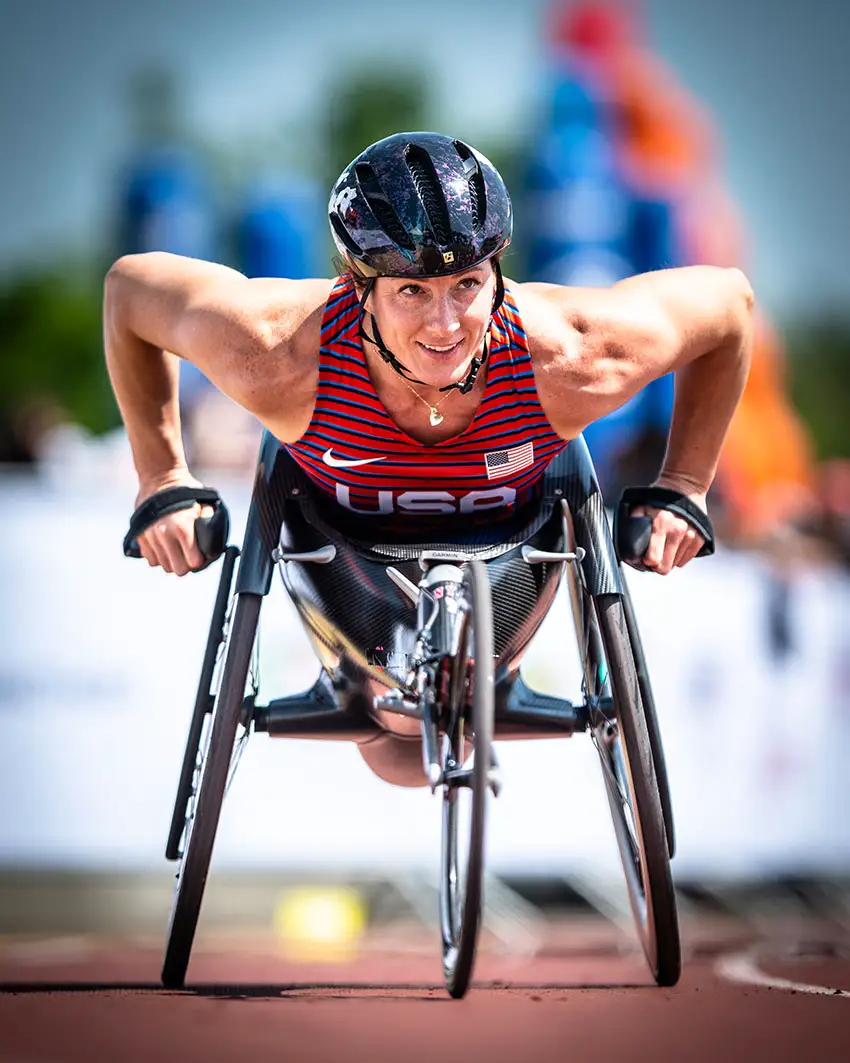
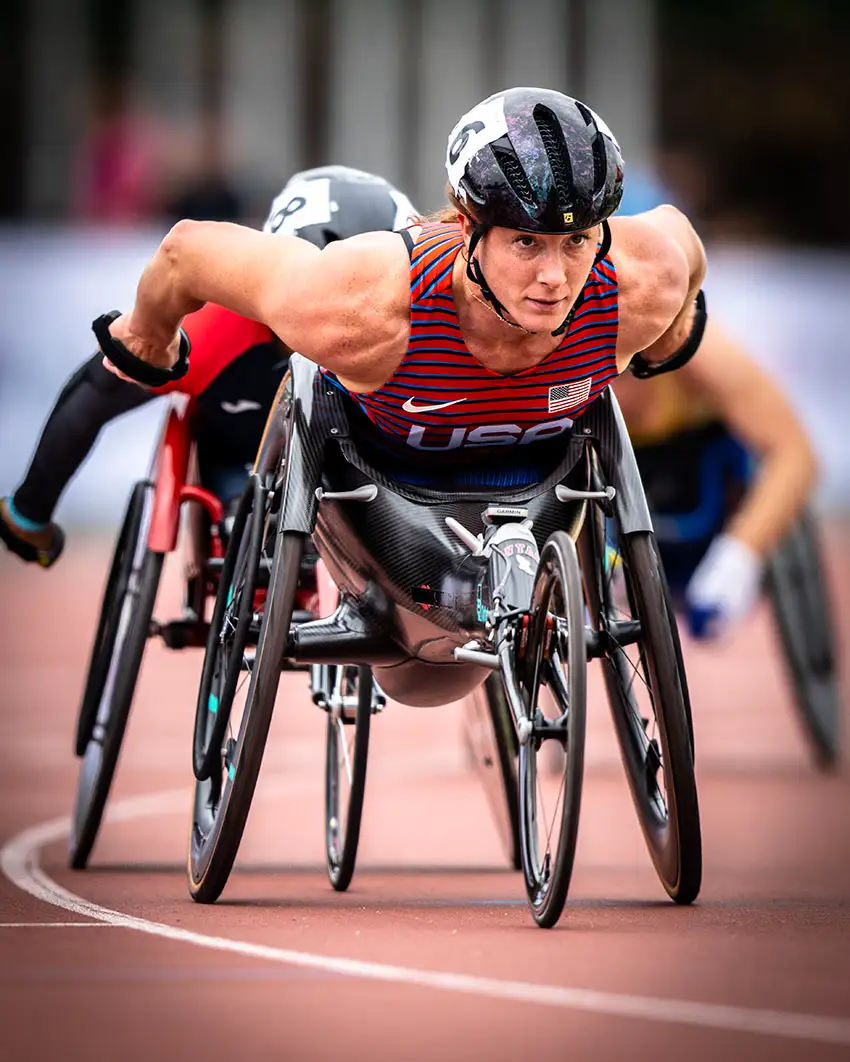
3D Printed Wheelchair Racing Gloves Overview
3D printed wheelchair racing gloves, manufactured by CRP USA using Selective Laser Sintering (SLS) and Windform XT 2.0, have transformed the production of racing gloves for Paralympics athlete Tatyana McFadden. By overcoming the limitations of traditional manufacturing methods, this innovative solution offers unparalleled customization, durability, and performance.
The success of the collaboration highlights the potential of advanced 3D printing service to meet the unique needs of athletes and to continue pushing the boundaries of sports equipment design.
Introduction
Wheelchair racing demands exceptional performance from athletes due to the high friction generated by constant hand-wheel contact. Traditional gloves often fail to meet the standards required by athletes like Tatyana McFadden. This case study explores how Additive Manufacturing, specifically the integration of Selective Laser Sintering and the Carbon fiber-filled thermoplastic composite material, Windform XT 2.0, revolutionized the creation of 3D printed wheelchair racing gloves. This ensured superior performance, comfort, and durability.
The Beginning
Before adopting CRP USA’s solution, the 8-time Paralympics Gold medallist Tatyana McFadden used standard mould kits for her gloves, finding the quality inadequate. Traditional methods struggled to produce gloves that could withstand the intense stress of wheelchair racing while maintaining precision and comfort.
Tatyana recalls, “My first wheelchair racing gloves were called ‘harness gloves’. They were shaped like thumbs, and made of heavy-duty fabric with rubber padding. Their softness made me feel the impact every time I hit the hand ring. By the 2008 Paralympic Games, my team and I began making hard gloves. We would take plastic beads, melt them in a pot of boiling water, and then mould the plastic to my hands. This process took days to perfect. Sometimes we would have to start over and throw the whole plastic glove back in the water. Once perfected, I did not let the gloves out of my sight because they would melt if left in the car or in the heat for too long. Over time, the plastic would wear down, so we made the gloves thick, but they were heavy.”
These gloves lacked the necessary durability to withstand the intense stress of racing, and would often crack and deteriorate quickly, requiring frequent repairs and replacements. This constant need to maintain the gloves took away from Tatyana’s focus on training and competing.
In 2015, a significant change occurred when Tatyana had the opportunity to experiment with 3D printed gloves, thanks to a sponsor who was assisting Team USA’s wheelchair racers. Tatyana found the 3D printed racing gloves “much lighter and easier to produce in quantity. I was so impressed,” she says.

The Connection with CRP USA
In 2016, Tatyana connected with CRP USA to continue investing in 3D printing racing gloves, aiming for them to be “stronger and more durable”, compared to what they were working with in 2015.
“After a friend of mine told me about CRP USA,” Tatyana adds, “I reached out to them and shared my story. I was so excited when I met everyone in person. They are an incredible partner and have really helped me so much. Not just in their innovation but the confidence they gave me since I do not have to worry about the performance of my racing gloves.”
Tatyana explains that the CRP USA team helped bring her vision for the current gloves to life, making the vision a reality. As an athlete, especially in Para Track and Field, she has a lot of equipment, which can be overwhelming. She emphasized the importance of having the best equipment and the support to maintain it.
Before working with CRP USA, she used to stress a lot before races about her gloves and would sometimes spend hours changing the rubber or repairing them.
“After two decades of racing,” she underlines, “I know the importance of racing gloves and how quickly the rubber wears down with all the training we do. The CRP USA team applies the rubber to the 3D-printed gloves in an extremely durable way. Before, I had to super glue and duct tape the rubber for extra durability, but it would peel off because it was glued by hand. Now, with CRP USA’s solution, the rubber is so secure, that only tools or a machine can remove it. With the 3D printing material the CRP team chose – composite Windform XT 2.0 – I no longer worry and can focus on training and competing for Team USA. I love this material. Its smoothness helps me avoid cuts on my hands when wearing them for extended periods.”

Challenges to Face with 3D Printed Wheelchair Racing Gloves
Strength and durability were undoubtedly important characteristics that Tatyana required from CRP USA to compete at her best, but they were not the only ones.
Lightness, stiffness, resistance to wear and tear, and resistance to weather were other important features Tatyana wanted for her new gloves. “When I met with the CRP USA team,” she specifies, “we also talked about heat, rubber, weather effects, and straps for the gloves so they can stay in my hands better. When competing outside, we face various weather conditions, and I want to be ready for anything. My gloves have cracked in the past. My strokes produce a lot of force when I hit the hand ring, and my previous gloves lasted less than a year. I also wanted a better way to add rubber to the hand rings. The CRP USA team listened to my needs and managed to satisfy them in the best possible way.”

The Solution with 3D Printed Wheelchair Racing Gloves
Before the construction of the parts, discussions with customers are essential to understand their needs in order to satisfy them as best as possible. After several meetings with Tatyana, the CRP USA team opted for Laser Sintering technology and Windform XT 2.0 as the manufacturing material. This solution was selected as the best one to address Tatyana’s everyday challenges. In this specific case, the rubber used in the 3D printed gloves is a standard off-the-shelf item. The CRP USA team trims it to size and bonds it to the gloves using a structural adhesive. This operation demonstrates the high professionalism of the CRP USA team and the compatibility of Windform XT 2.0 with various components, ensuring seamless bonding without any issues.
Nathan “Nate” Baker, Senior Project Coordinator at CRP USA, explains, “Throughout her career, Tatyana found that the quality and detail of her gloves were just not up to the high standard she needed. That’s when the Windform range of composites for 3D printing, created by our Italian partner CRP Technology, came into play. At CRP USA, we have tried several different Windform materials for her, with the gold standard becoming Windform XT 2.0.”
Windform XT 2.0 is known for its superior mechanical properties. These properties ensured the gloves could withstand the constant, high-friction environment of wheelchair racing without deterioration. This durability significantly extended the lifespan of the gloves compared to traditional materials. Additionally, the flexibility and shock-absorbing properties of Windform XT 2.0 ensured maximum comfort, allowing Tatyana to focus solely on her performance without discomfort or distraction.
Results Obtained with 3D Printed Wheelchair Racing Gloves
In order to enhance performance, increase efficiency, improve usability and at the same time reduce the weight of Tatyana’s new gloves, CRP USA employed internal structuring. This allowed a reduction in the weight of the gloves while maintaining strength, integrity, and improving durability. This was a significant contribution to Tatyana’s agility and speed during races. The weight reduction was indeed substantial, with the resulting 3D printed gloves in Windform XT 2.0 weighing approximately 100 grams, a 50% reduction from the traditional gloves.

“In order to save weight,” specifies Nate, “we shelled the parts out using an internal structure. Since it was hollow, some ‘plugs’ were required, which were bonded in place once all unsintered material was confirmed to have been evacuated from the parts.”

This solution proved to be highly effective thanks to the characteristics of the Windform XT 2.0 material and the manufacturing process. Once completed, the 3D printed wheelchair racing gloves in Windform XT 2.0 underwent testing for weight and durability, and the results were excellent.
Tatyana was very satisfied with the outcome: “I remember using the gloves in Windform XT 2.0 for the very first time on the track and on the road,” she says. “I was so impressed by how light and durable they were. My hands felt so light, it felt like I wasn’t holding onto anything. When I first put my hands into the glove, it was so smooth. They had also built in two holes where I could strap on the gloves to my hands instead of using additional clips.”

Further Developments for 3D Printed Wheelchair Racing Gloves
CRP USA and Tatyana continue to collaborate to enhance the 3D printed wheelchair racing gloves, focusing on improving grip and comfort, especially when competing in the rain. This ongoing partnership ensures that Tatyana always has access to the latest advancements in additive manufacturing technology, allowing her to maintain her competitive edge. As Tatyana emphasizes, “CRP USA team keeps finding ways to make the gloves even better. Together, we continuously strive to improve my performance.”
Conclusion
The collaboration between Paralympics medallist Tatyana McFadden and CRP USA has successfully harnessed the power of Selective Laser Sintering and Windform XT 2.0 Carbon fiber-reinforced thermoplastic composite material to create 3D printed wheelchair racing gloves that meet the demanding needs of elite athletes. This case study demonstrates the potential of advanced 3D printing technologies in revolutionizing sports equipment, offering unparalleled customization, durability, and performance. As Tatyana continues to dominate the world of wheelchair racing, her partnership with CRP USA serves as a testament to the transformative impact of innovative materials and manufacturing processes in sports.
The 3D printed wheelchair racing gloves have not only improved Tatyana McFadden’s performance but also enhanced her overall racing experience. By providing superior durability, comfort, and customization, the gloves have become an essential part of her racing equipment, enabling her to focus on what she does best – winning races and setting new records. Tatyana is currently training for the Paris Paralympics, which will be held in August and September 2024. She has already qualified for the marathon, and the track qualifications will take place this summer. In February 2024, at the 4th West Asian Para Games in Sharjah, UAE, Tatyana set two new world records and won six medals. She also placed 3rd at the TCS London Marathon.
From her website, “Tatyana McFadden is considered the fastest woman in the world. She has 20 Paralympic medals (including eight gold medals), 24 World Major Marathon wins including four consecutive Grand Slams (first place in Boston, Chicago, NYC and London marathons in the same year) and has broken five world records in track and field.”